Getting Kids to Think Through AI
Presented by Tony Vincent • November 2026
Thinking through AI means knowing when and why to use it, considering its consequences, using it to support your thinking, and always thinking about what it gives you back.
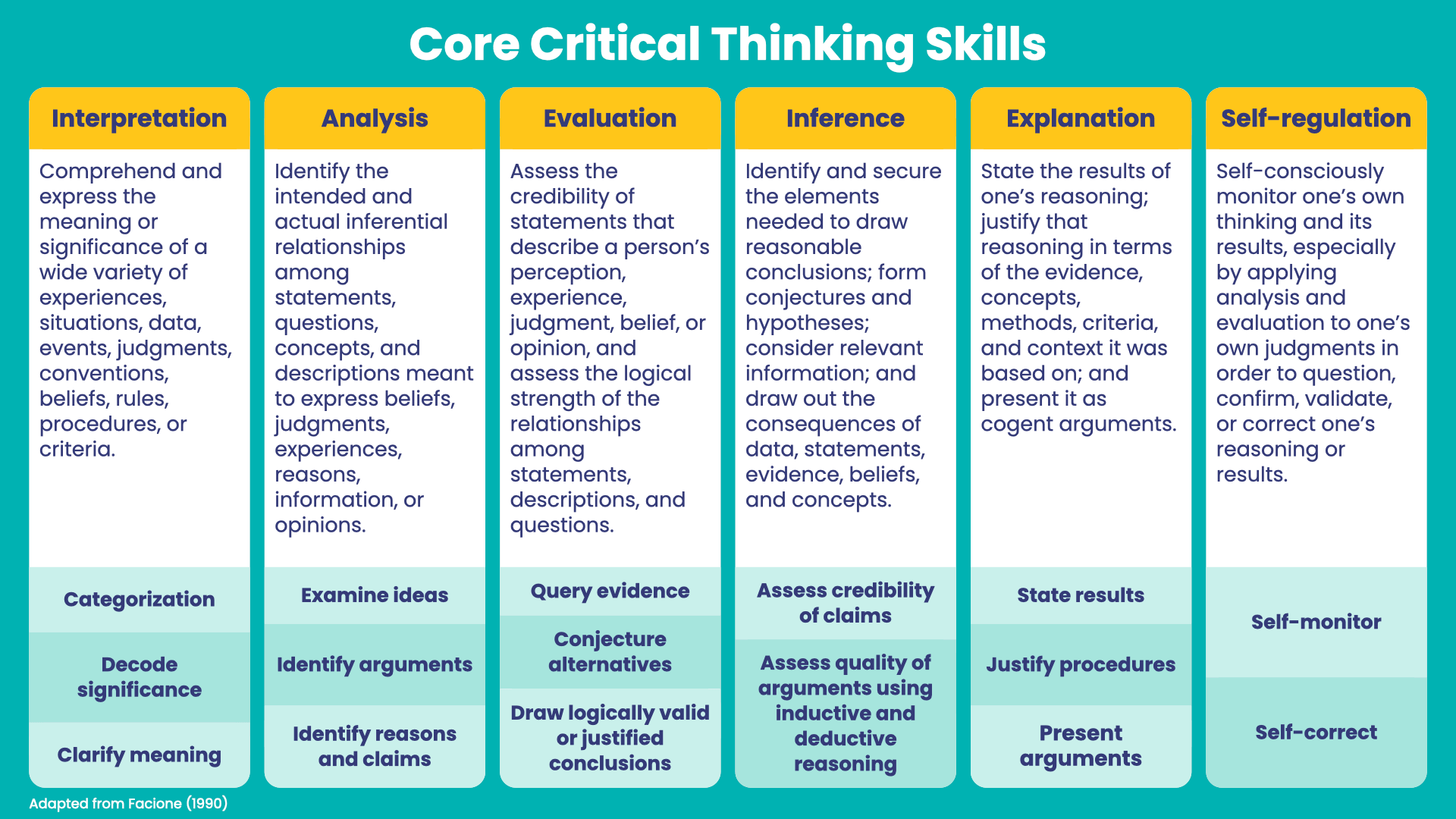
Critical thinking is the process of carefully examining information, making reasoned judgments, and reflecting on our own thinking.
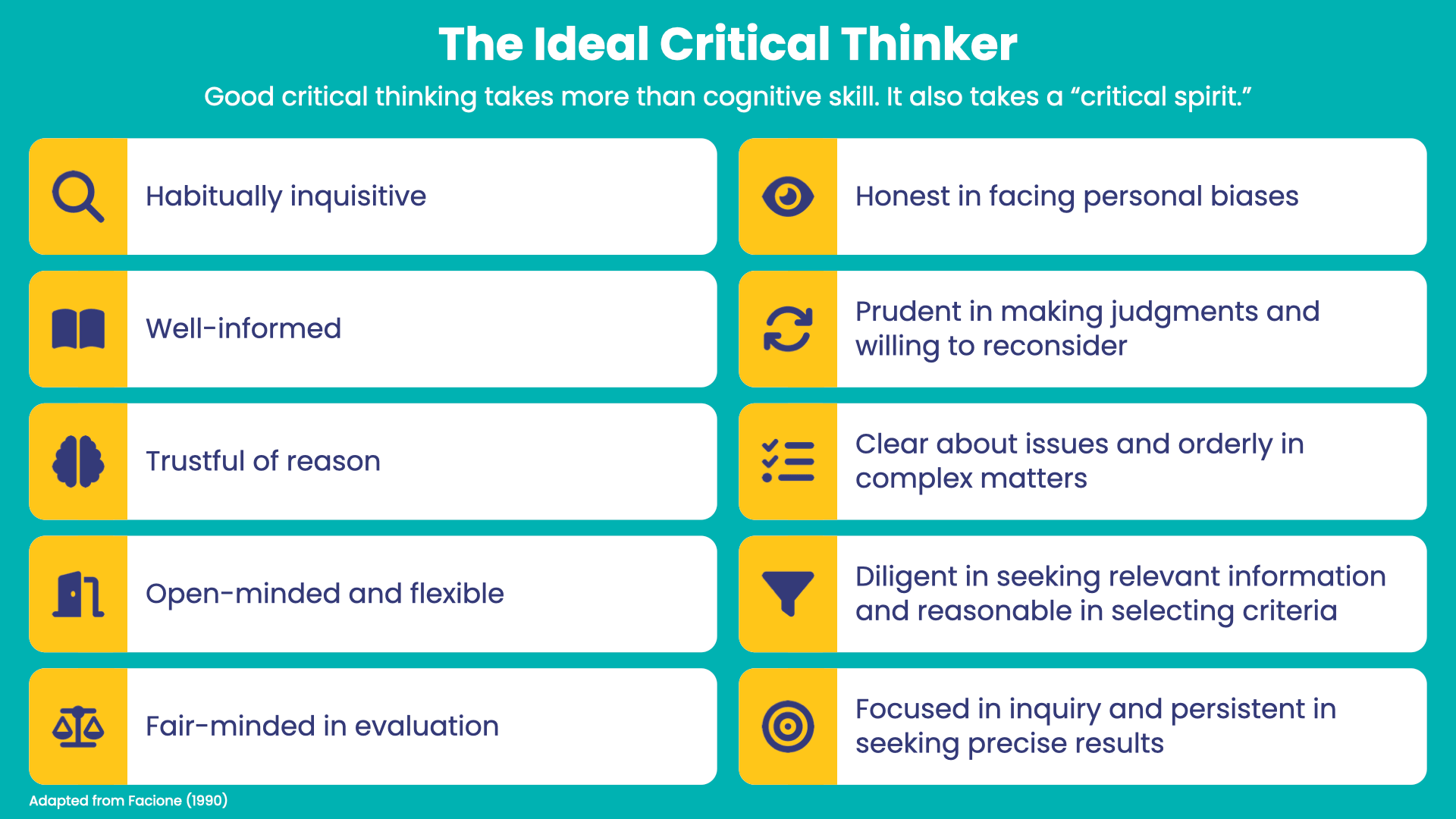
The Delphi Report in 1990 identified core critical thinking skills and traits of the ideal critical thinker.
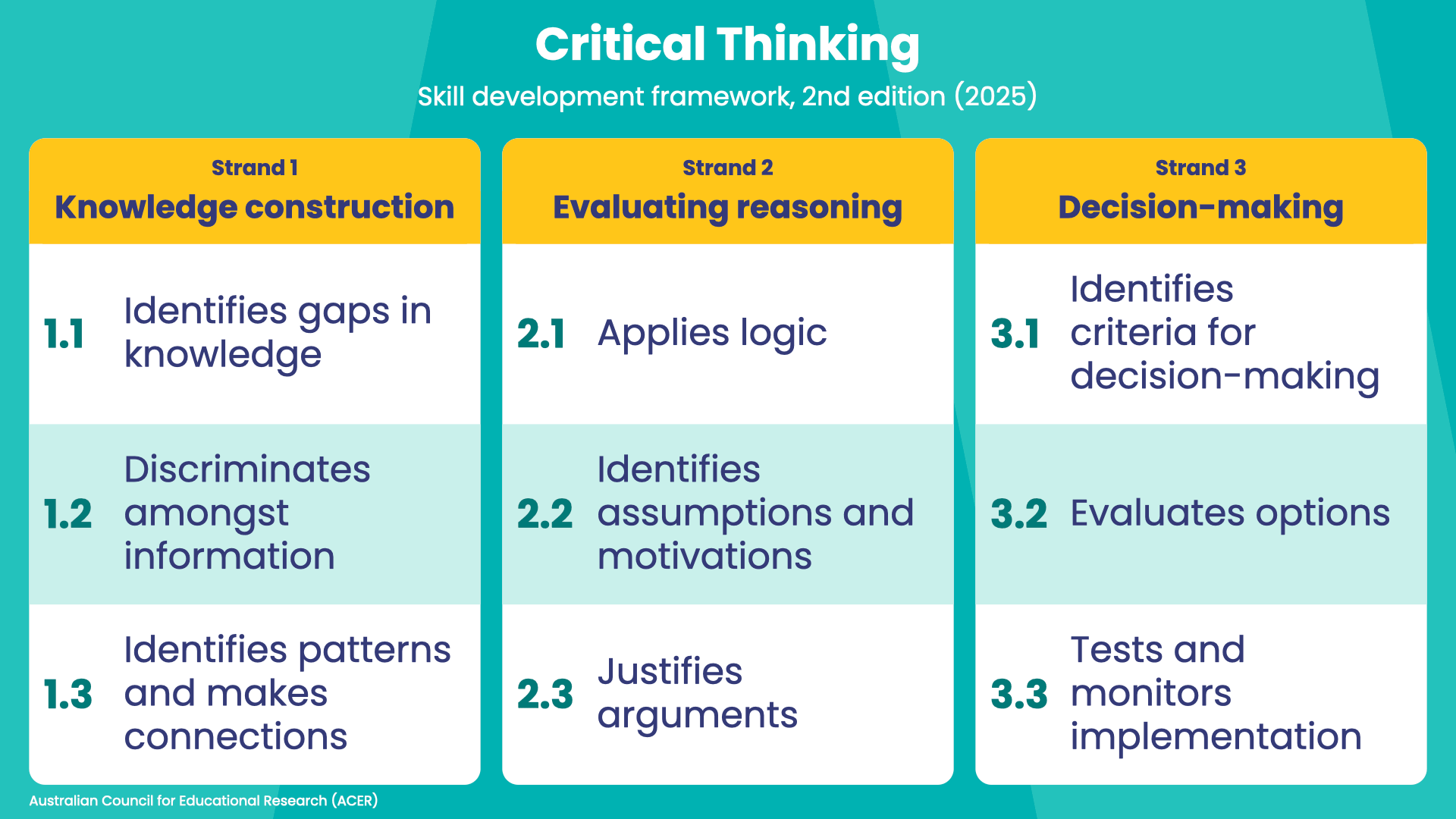
The Australian Council for Educational Research updated the critical thinking framework in 2025.
Thinking through AI applies these skills and habits of mind before, while, and after using AI, so students stay in charge of their own thinking.
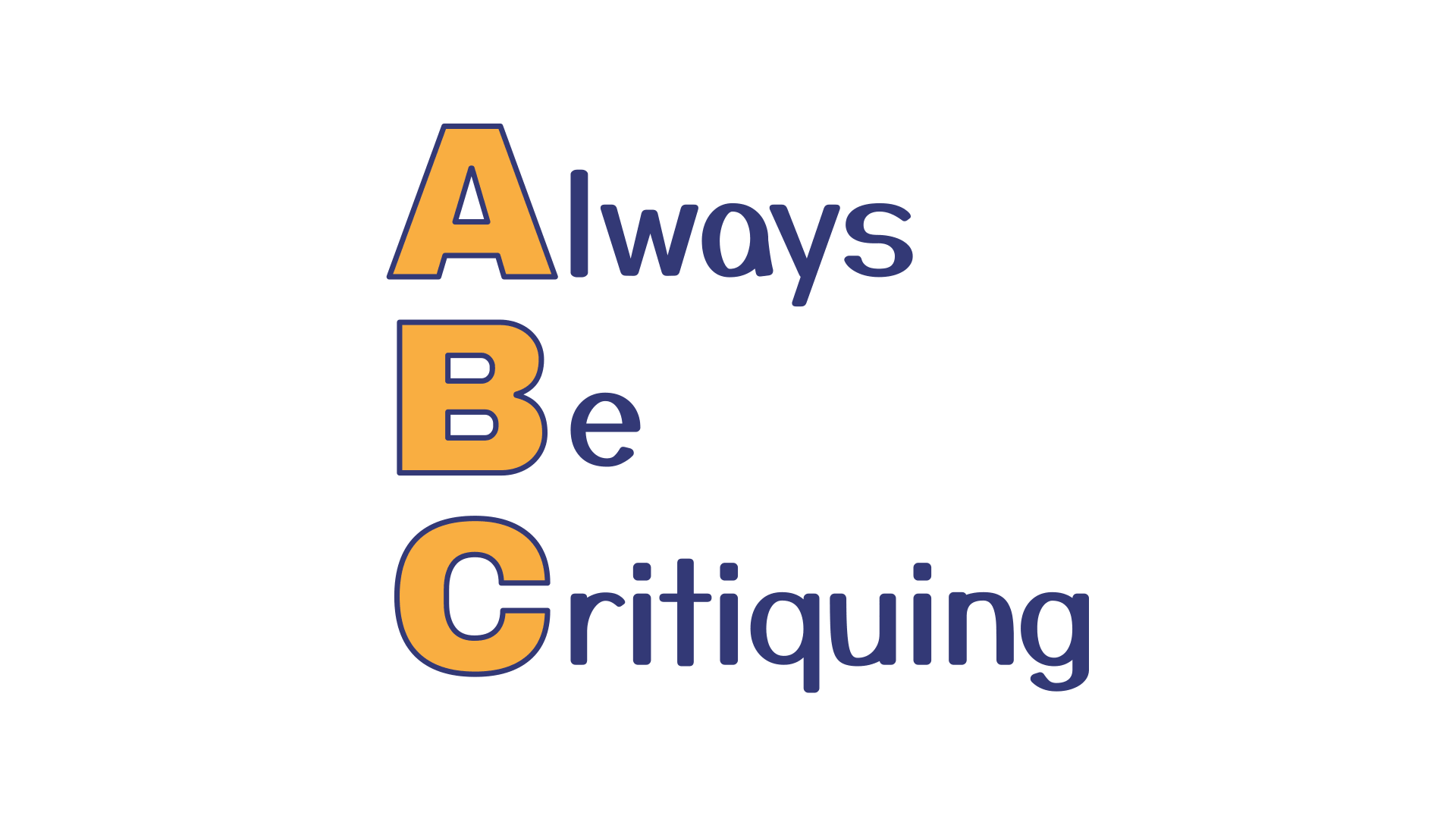
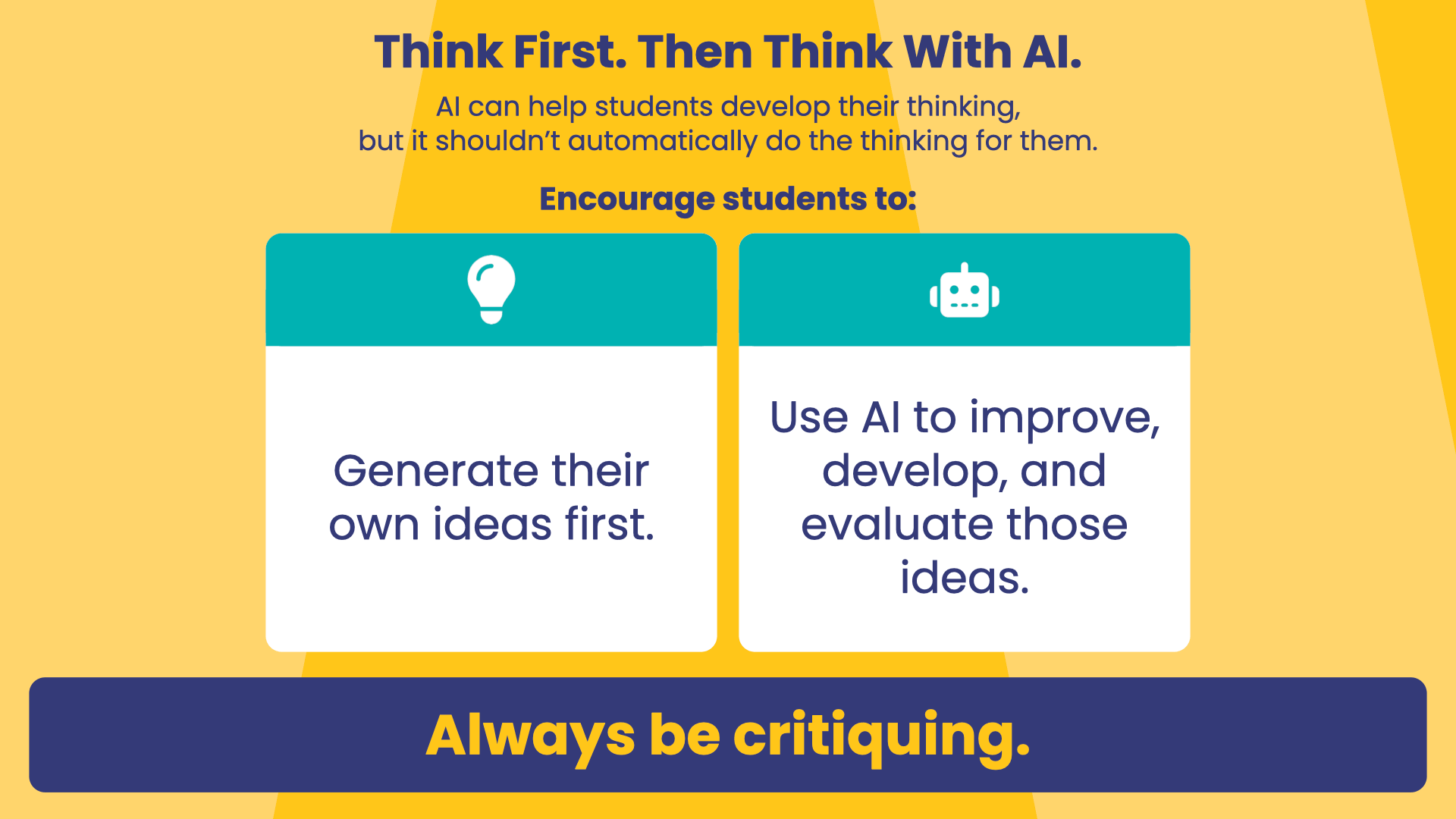
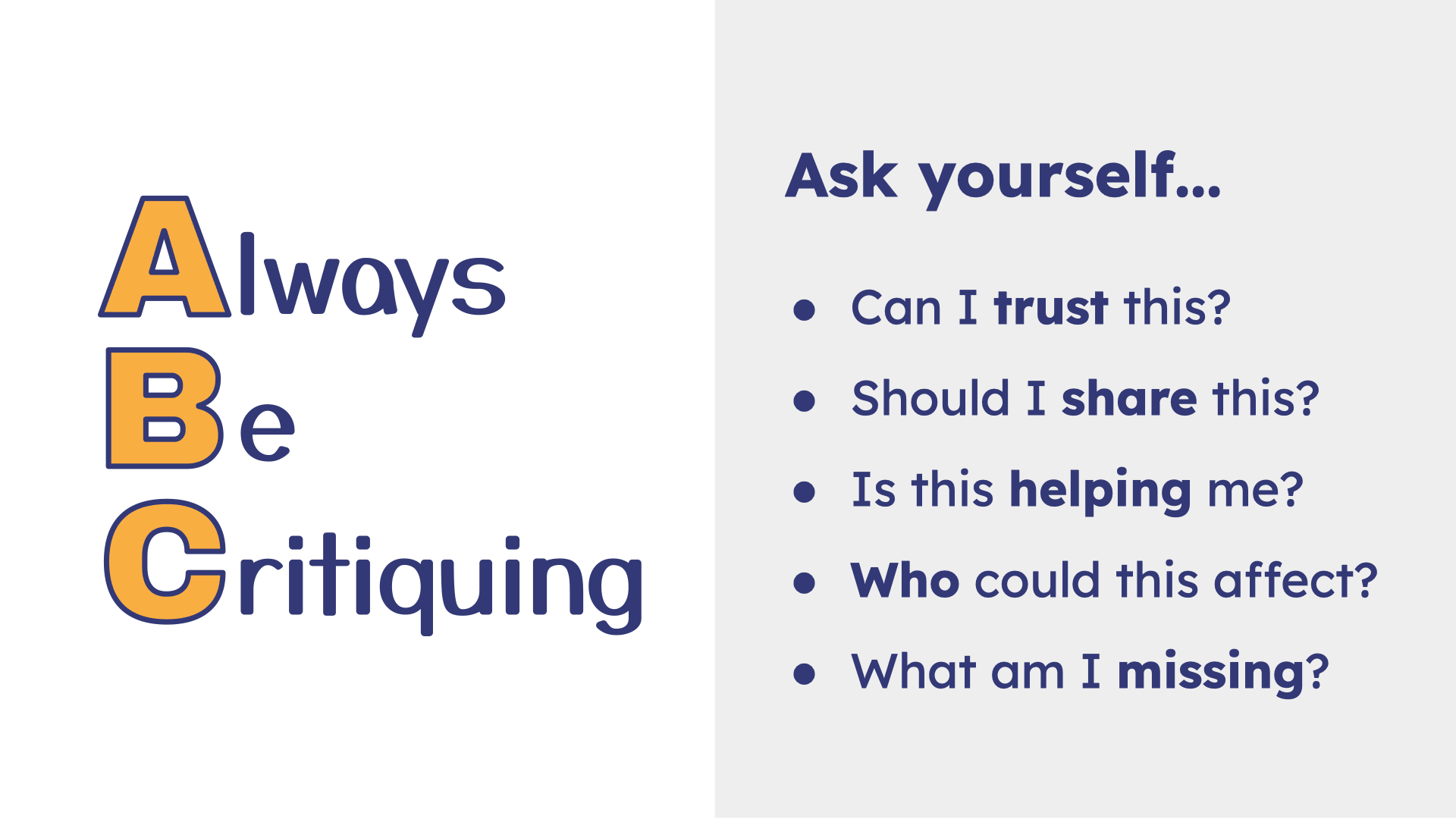
Always Be Critiquing turns these skills into one everyday habit: question what AI gives you, check it, and decide what to keep. (Thanks to Matt Miller for “ABC”).

Before Using AI
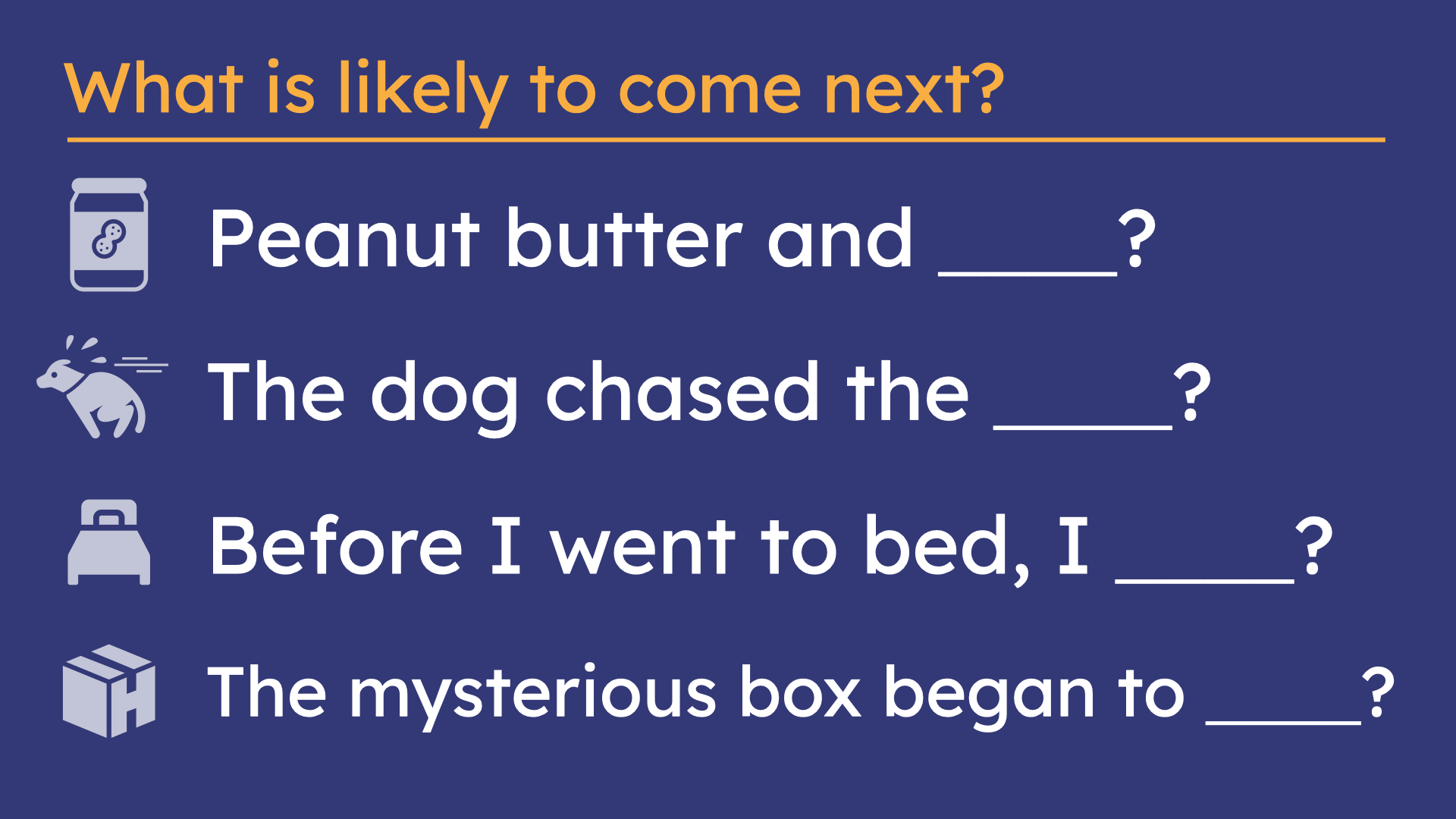
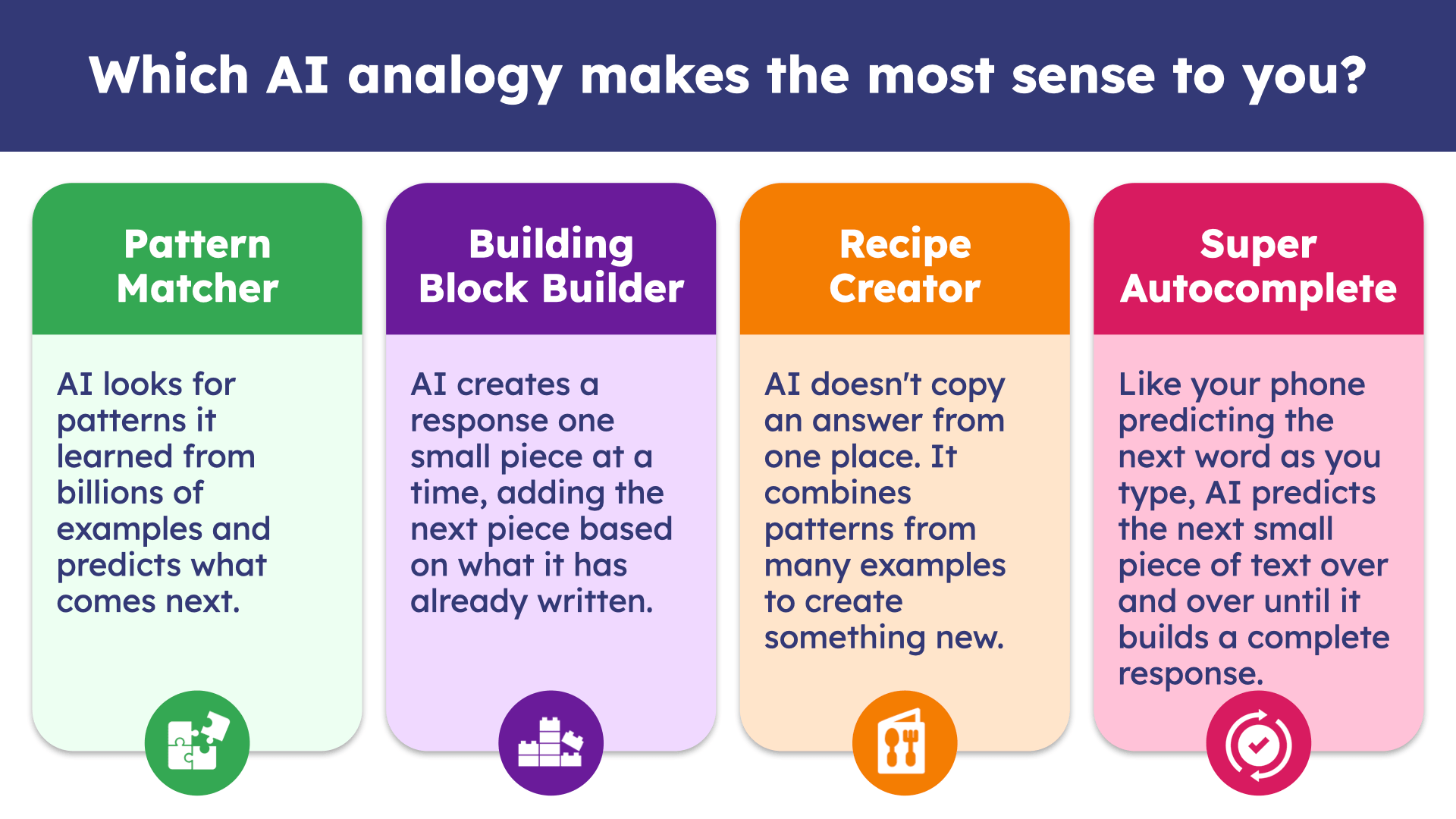
Know how AI works: it predicts, it doesn’t know
Weigh its impact, including the environment
Decide if you should use AI, with permission
Think first and predict what AI will say
Before students open an AI tool, they should understand how it works, weigh its impact, and do some thinking of their own first.
The first question to ask before using AI is: Should I use AI?
Generative AI has an environmental impact, so students need to evaluate their options and decide if the task even justifies AI usage.
AI for Education’s GenAI’s Impact on the Environment is a PDF with questions to help students weigh the costs and benefits of AI depending on the context. It also has classroom conversation starters.
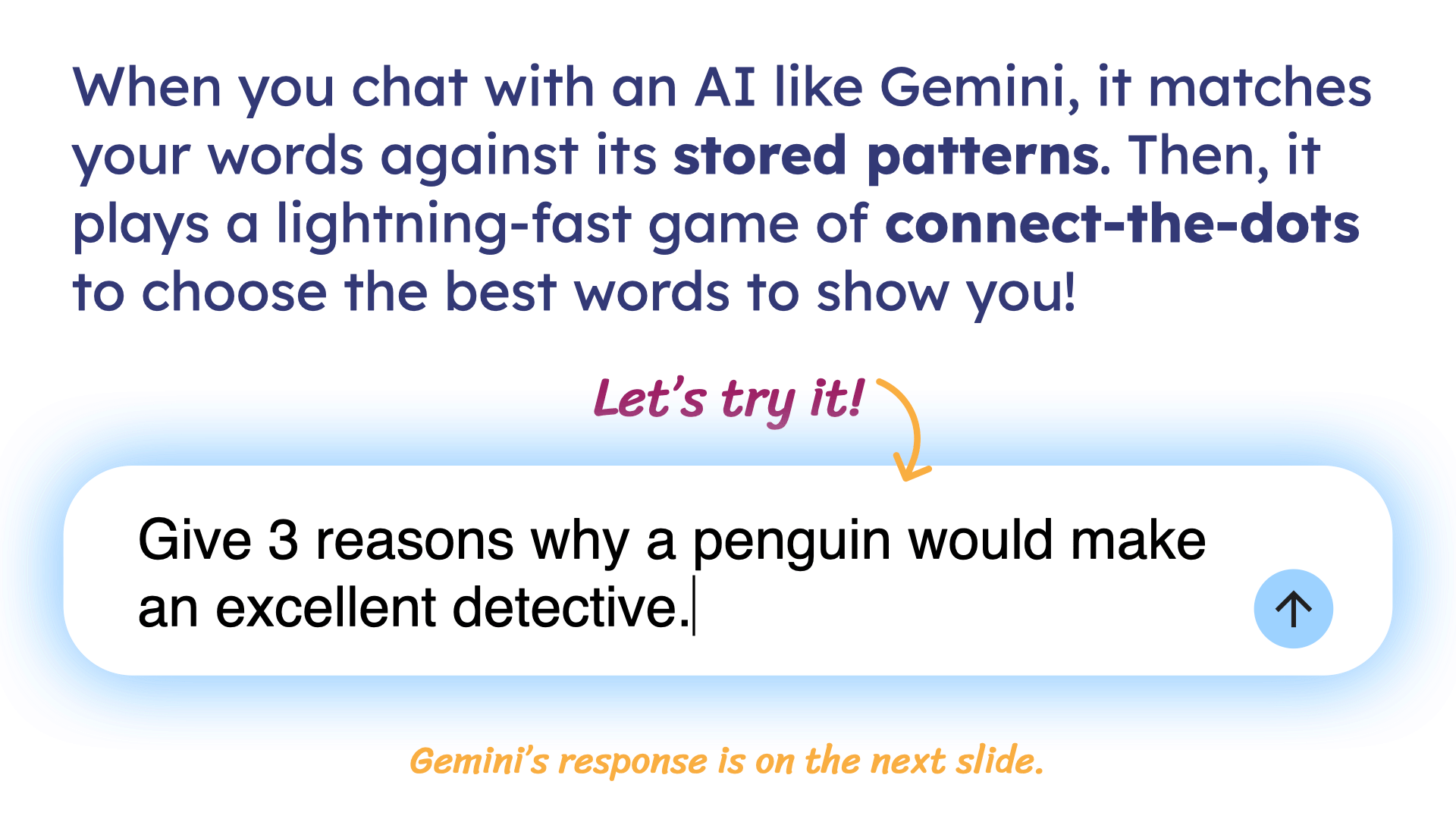
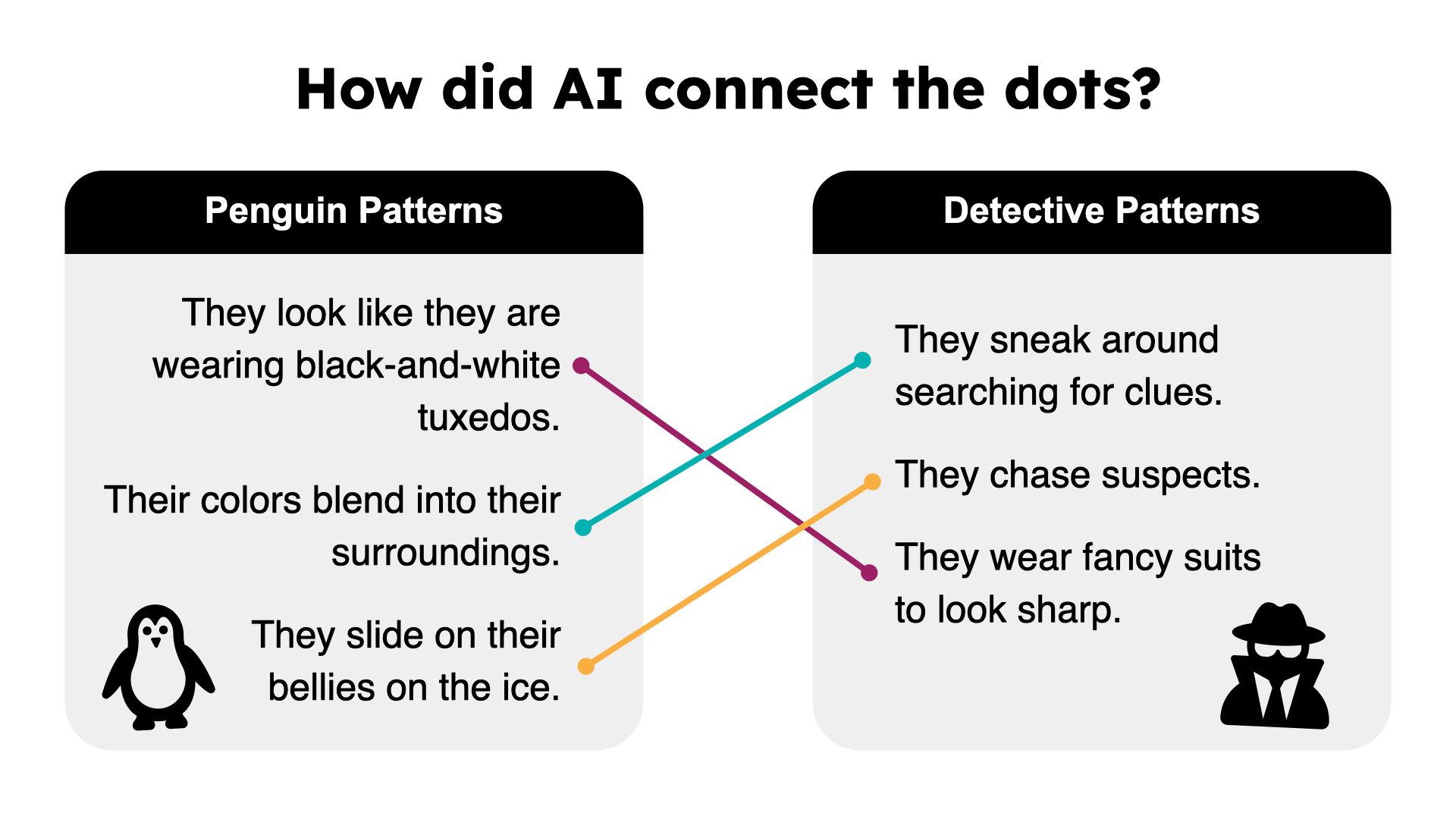
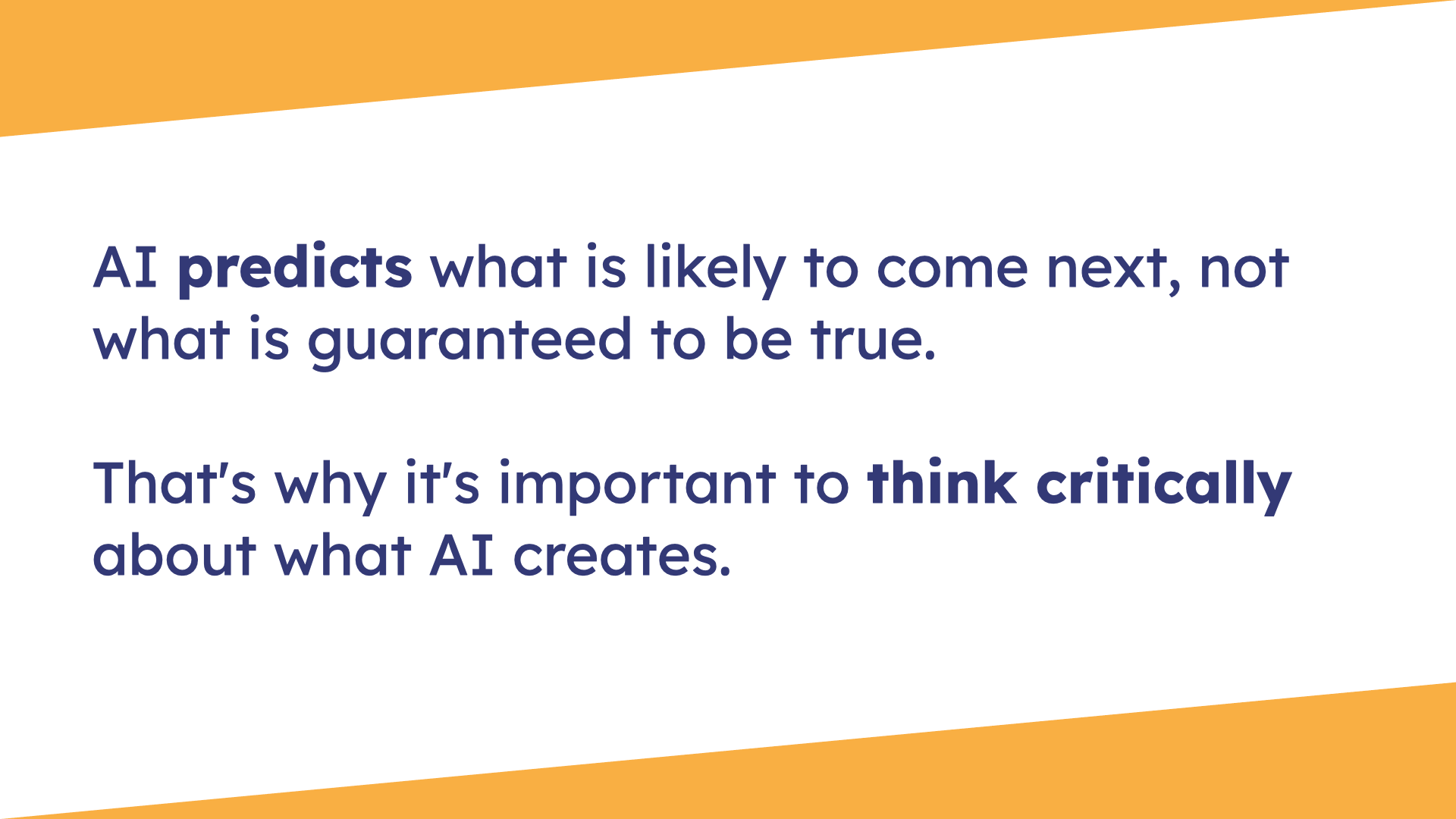
When students understand that AI predicts each next token from patterns in its training data, they realize it can sound confident without knowing whether it is right.
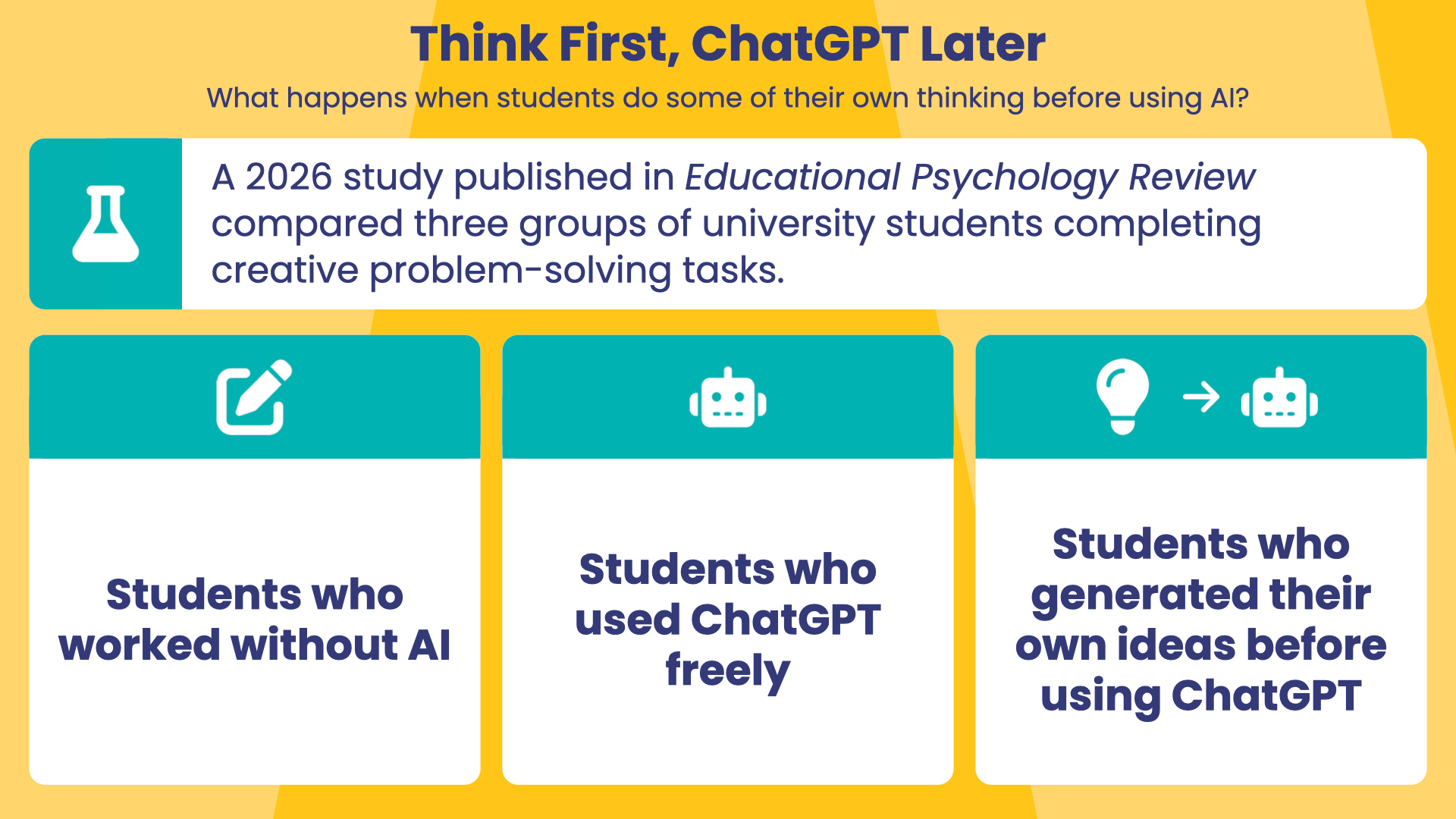
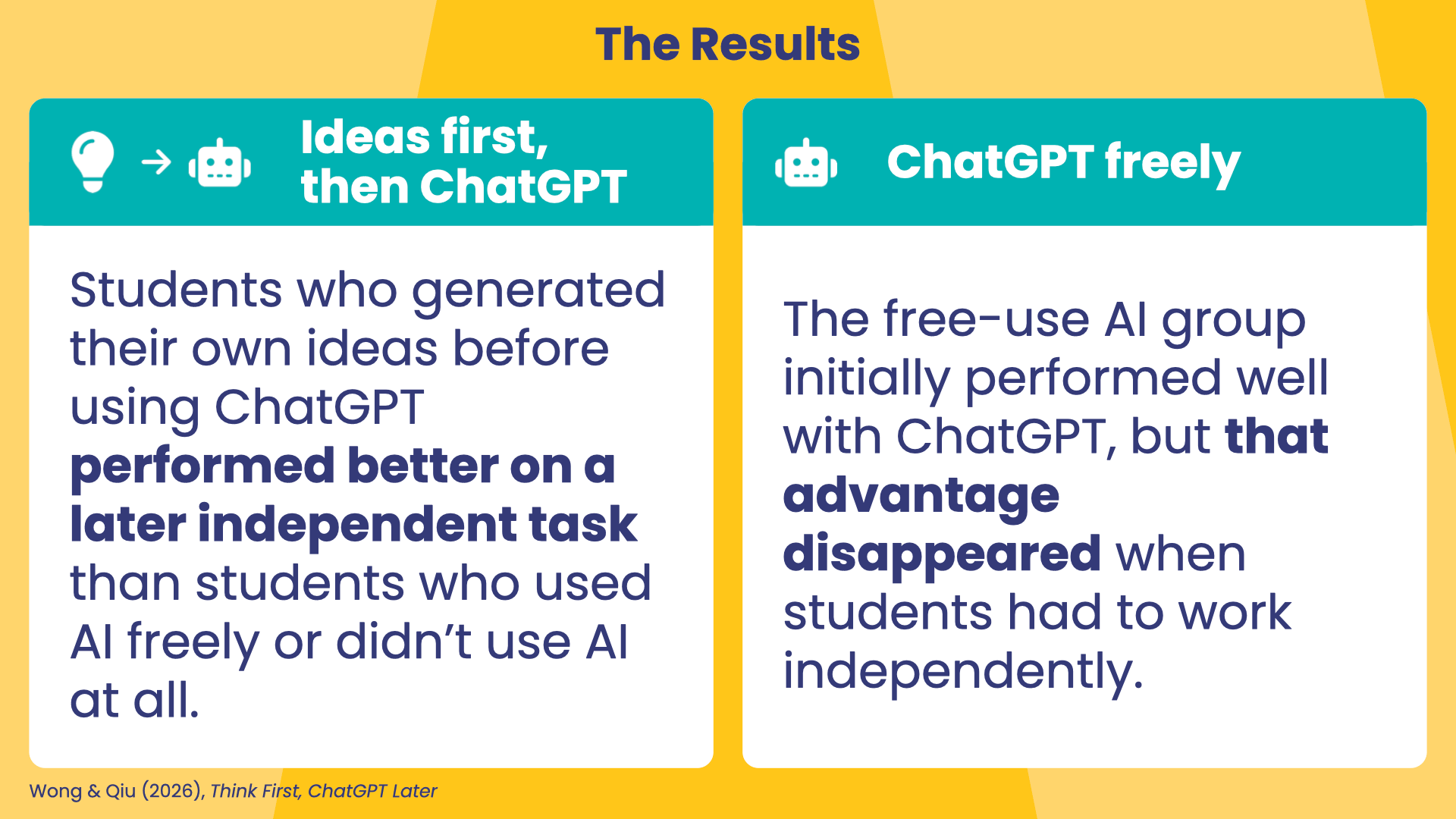
A 2026 study in Educational Psychology Review looked at how 196 university students used ChatGPT and how it affected their learning and creativity. The findings suggest that using AI to build on ideas you already have, rather than having it come up with solutions from scratch, leads to better independent creativity and more lasting learning.
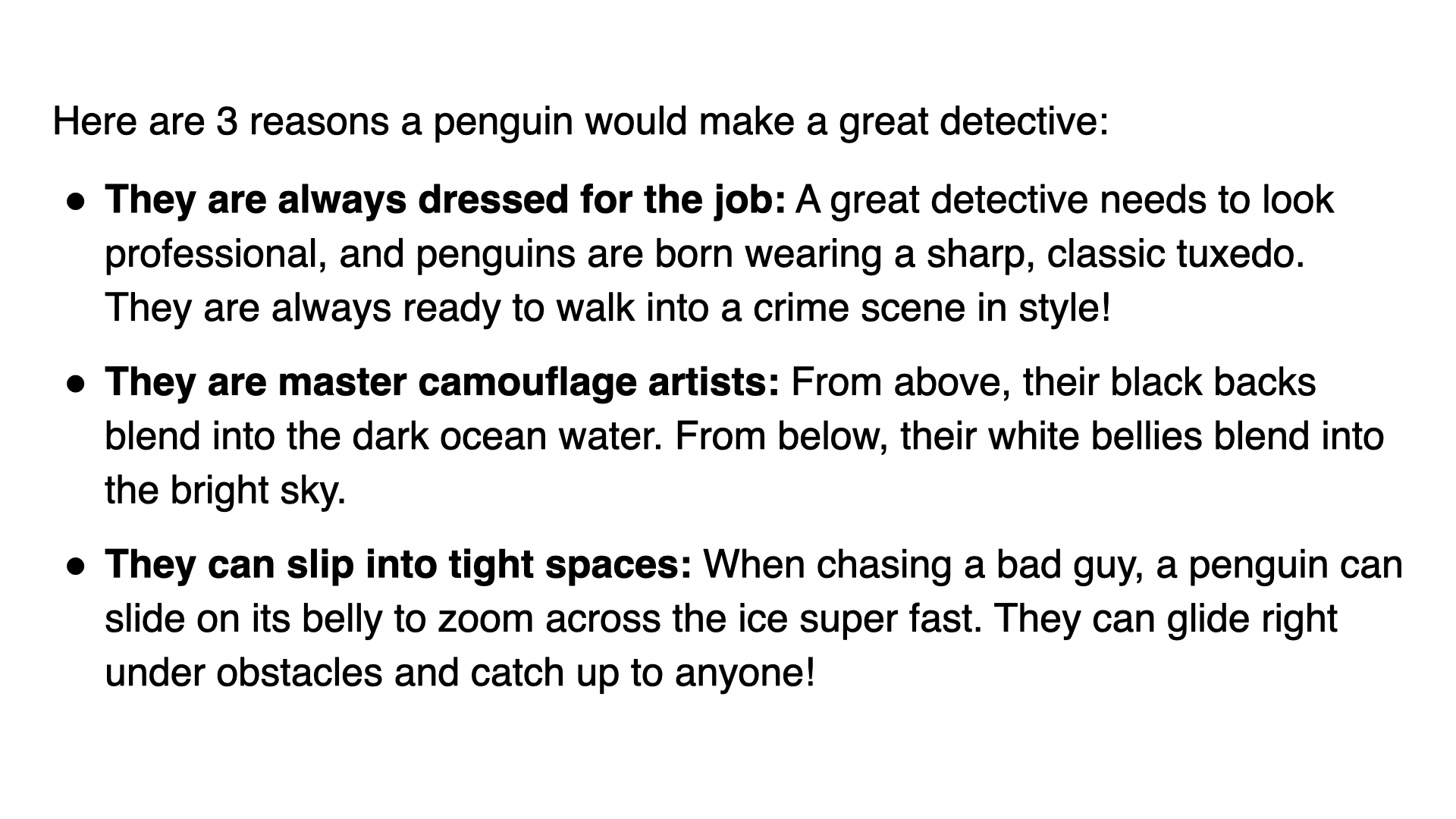
Before submitting anything to AI, encourage students to predict what the output will be. It’s a way to get them thinking before using AI and will likely lead them to be more critical.
While Using AI
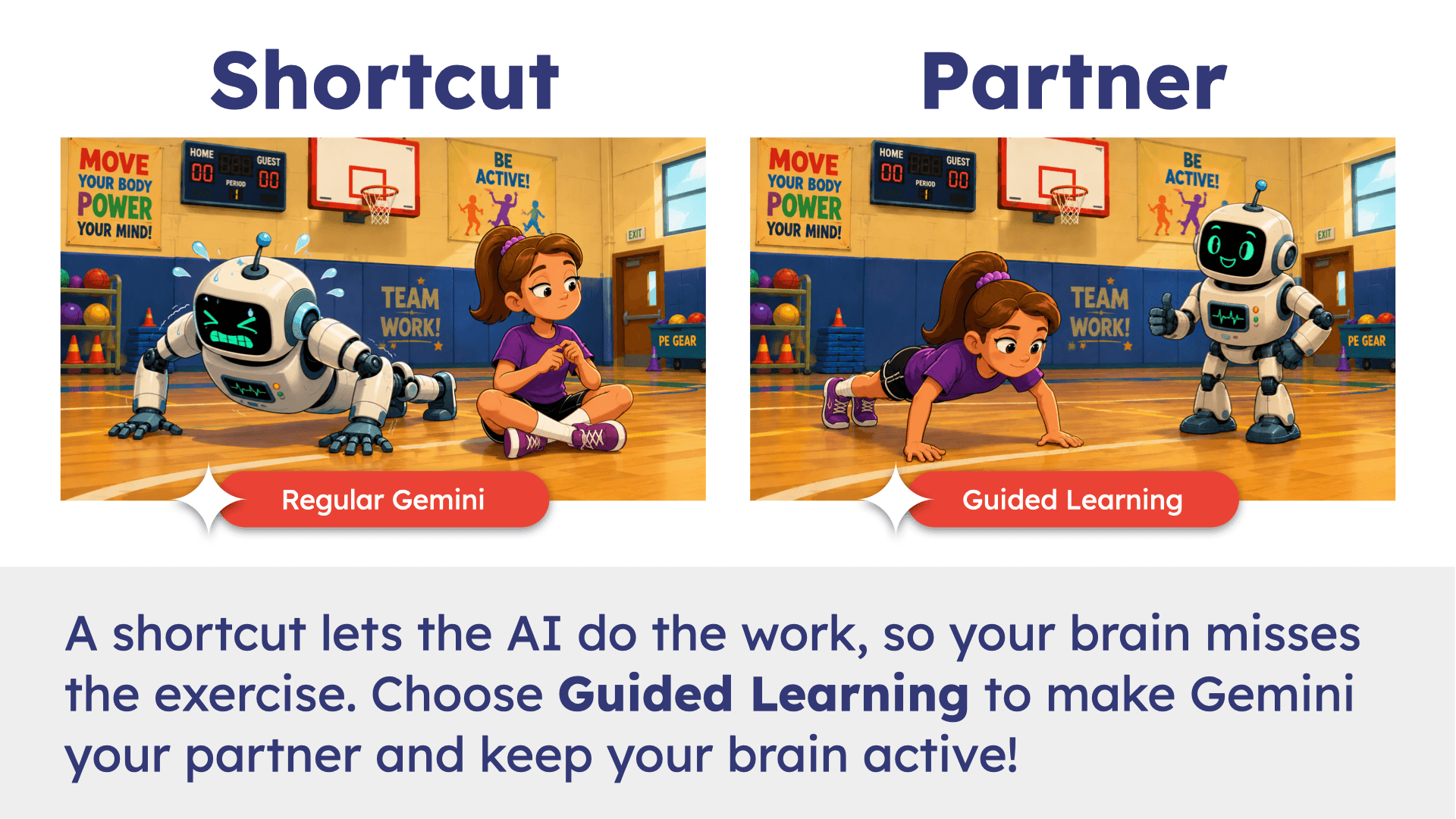
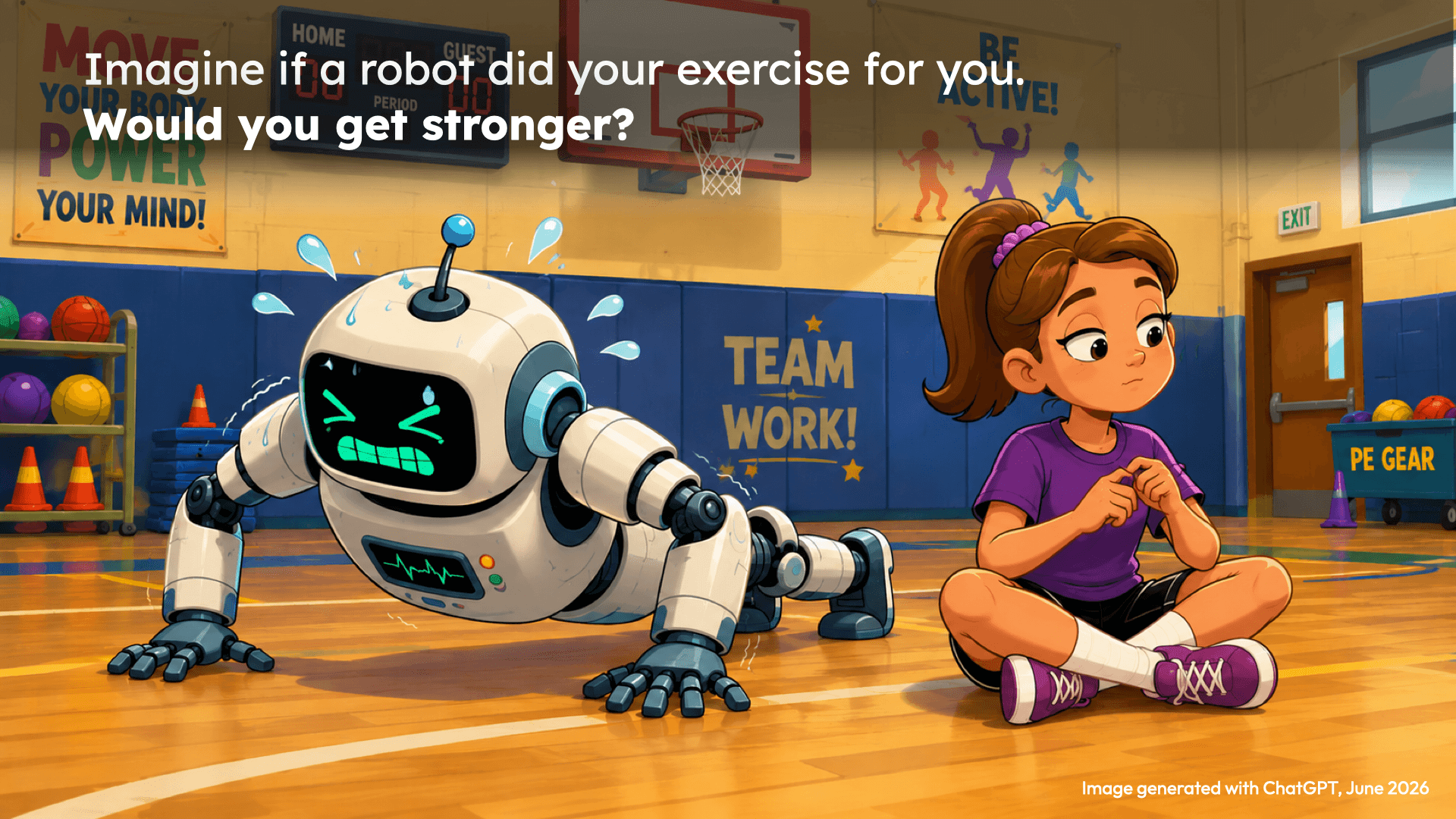
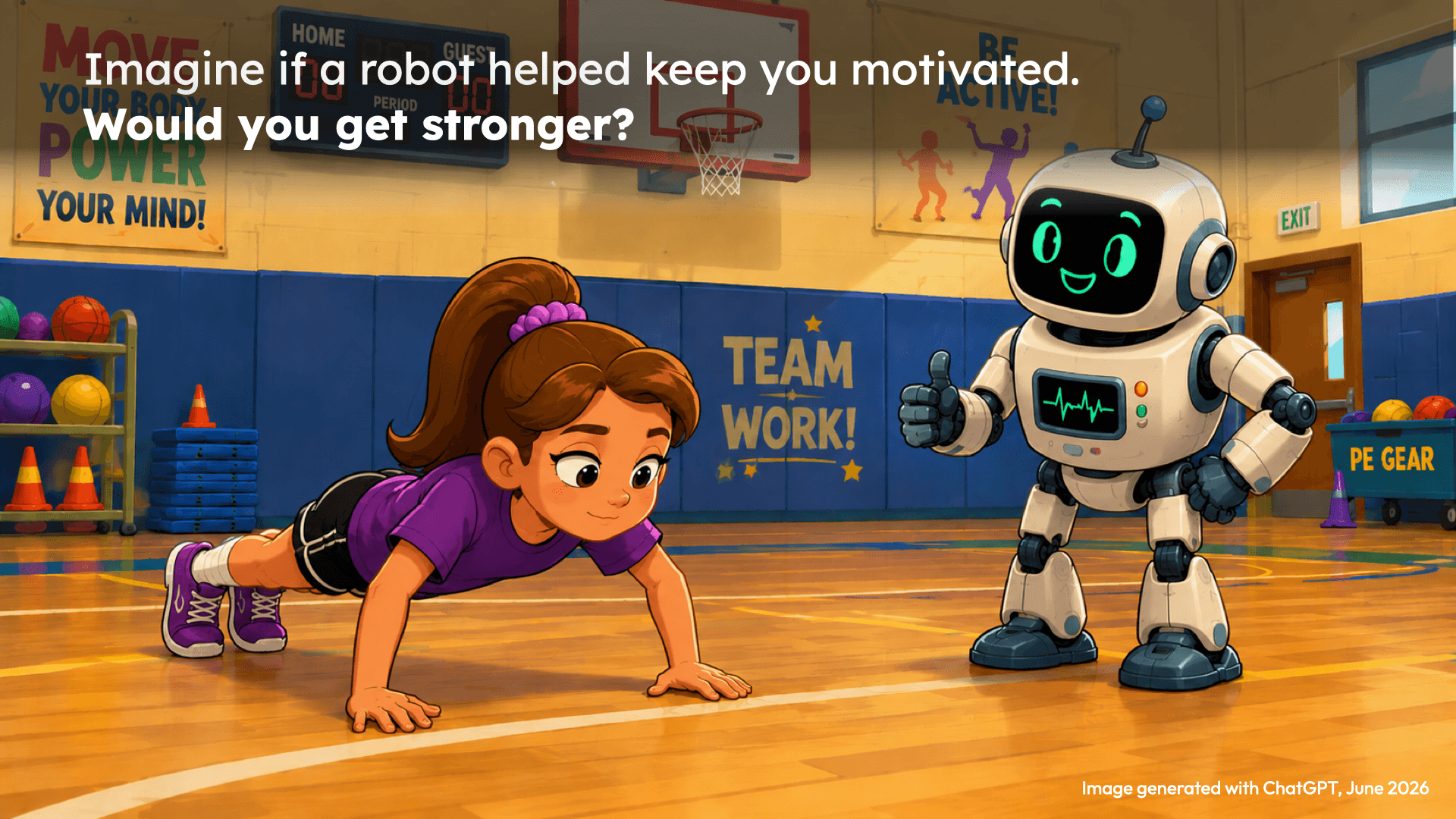
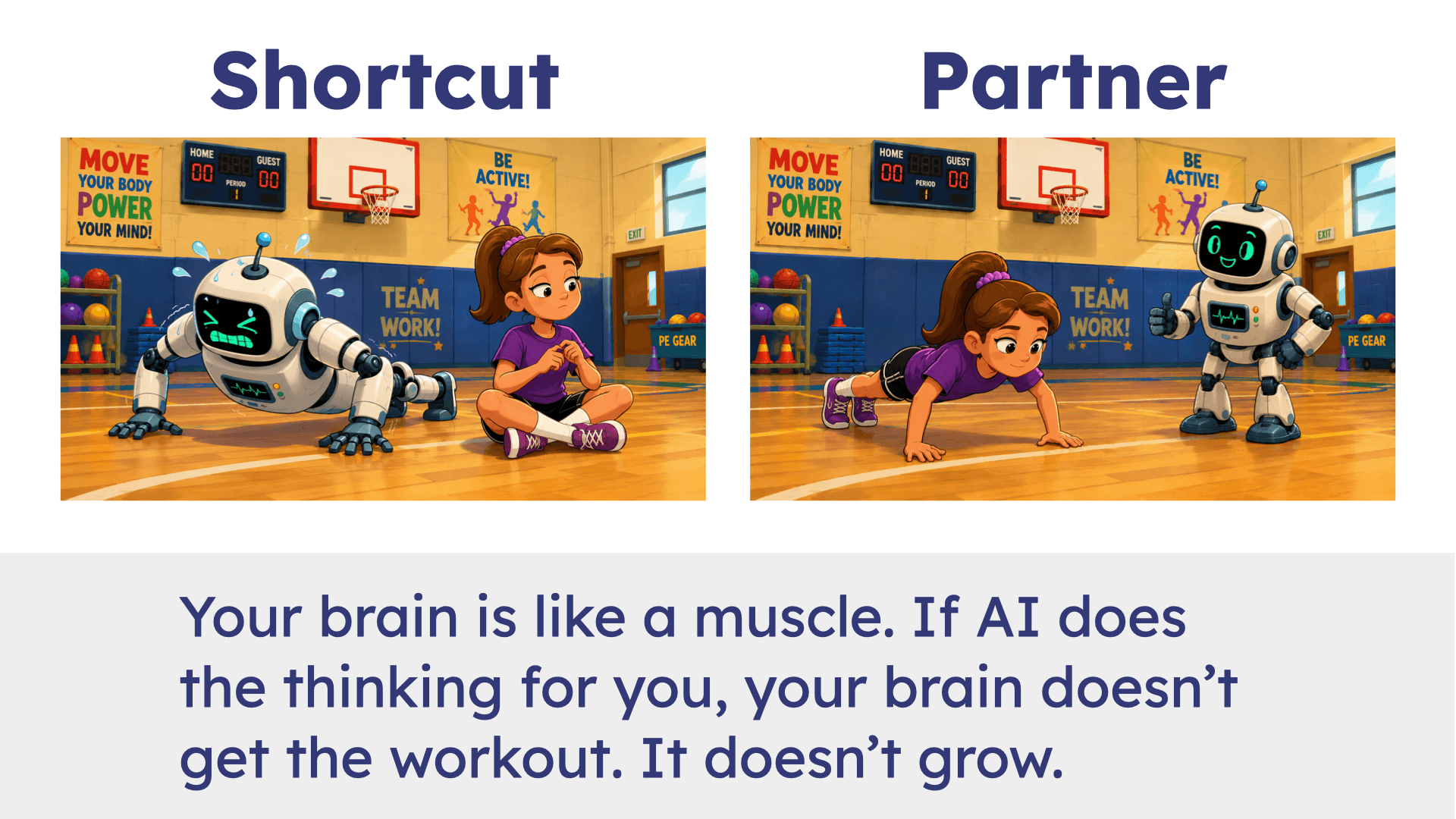
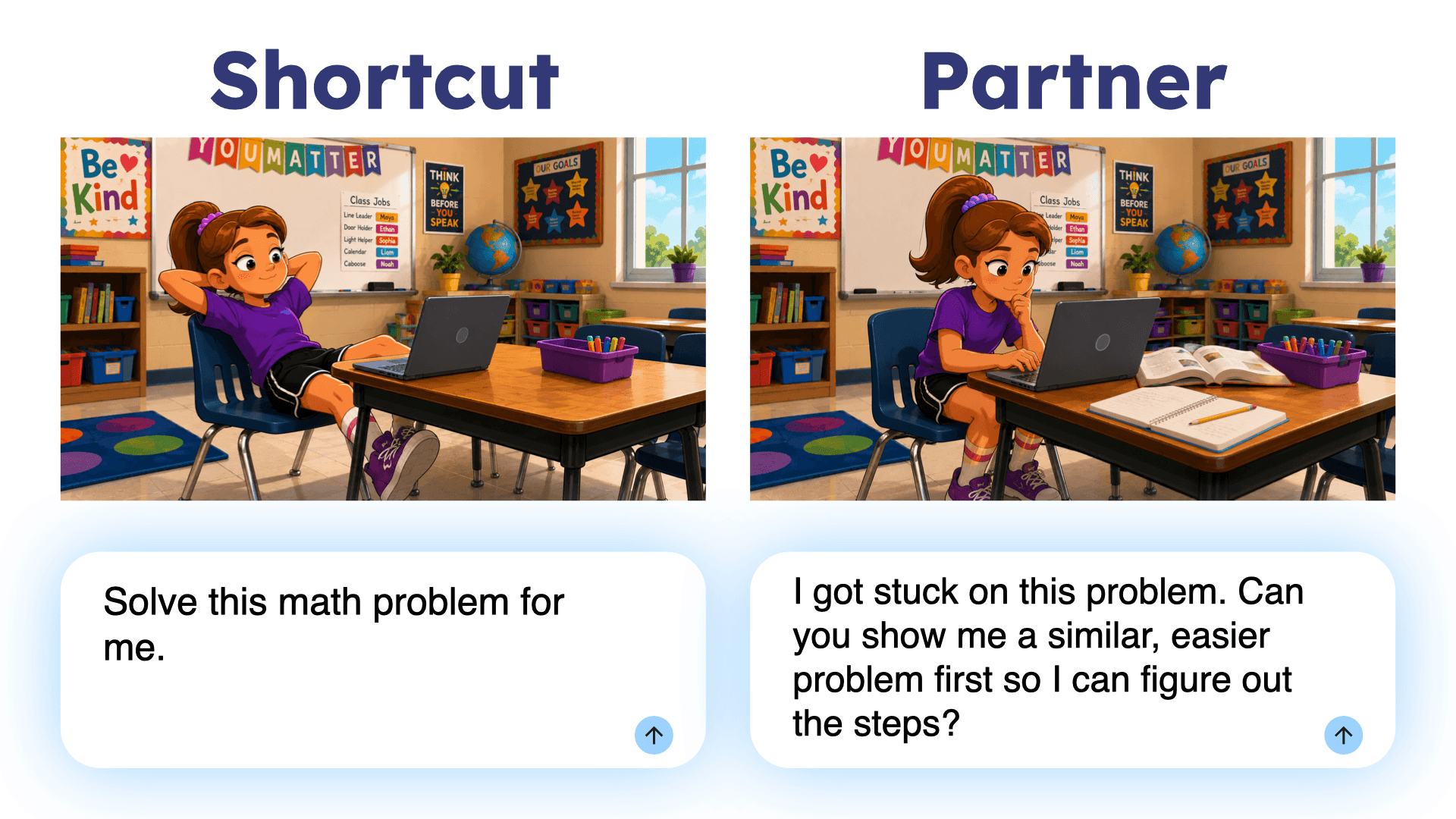
Use AI as a partner, not a shortcut
Keep the productive struggle
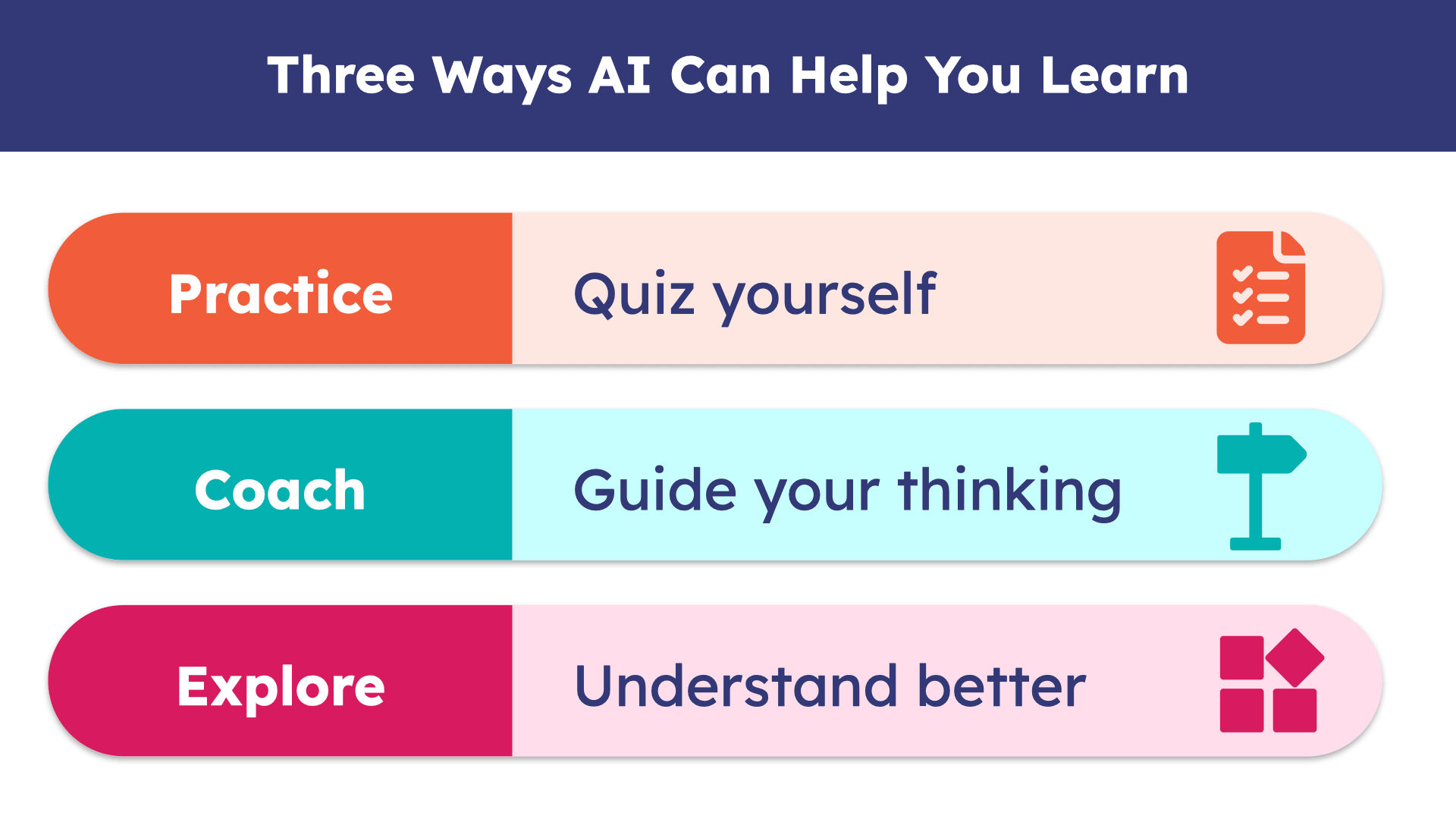
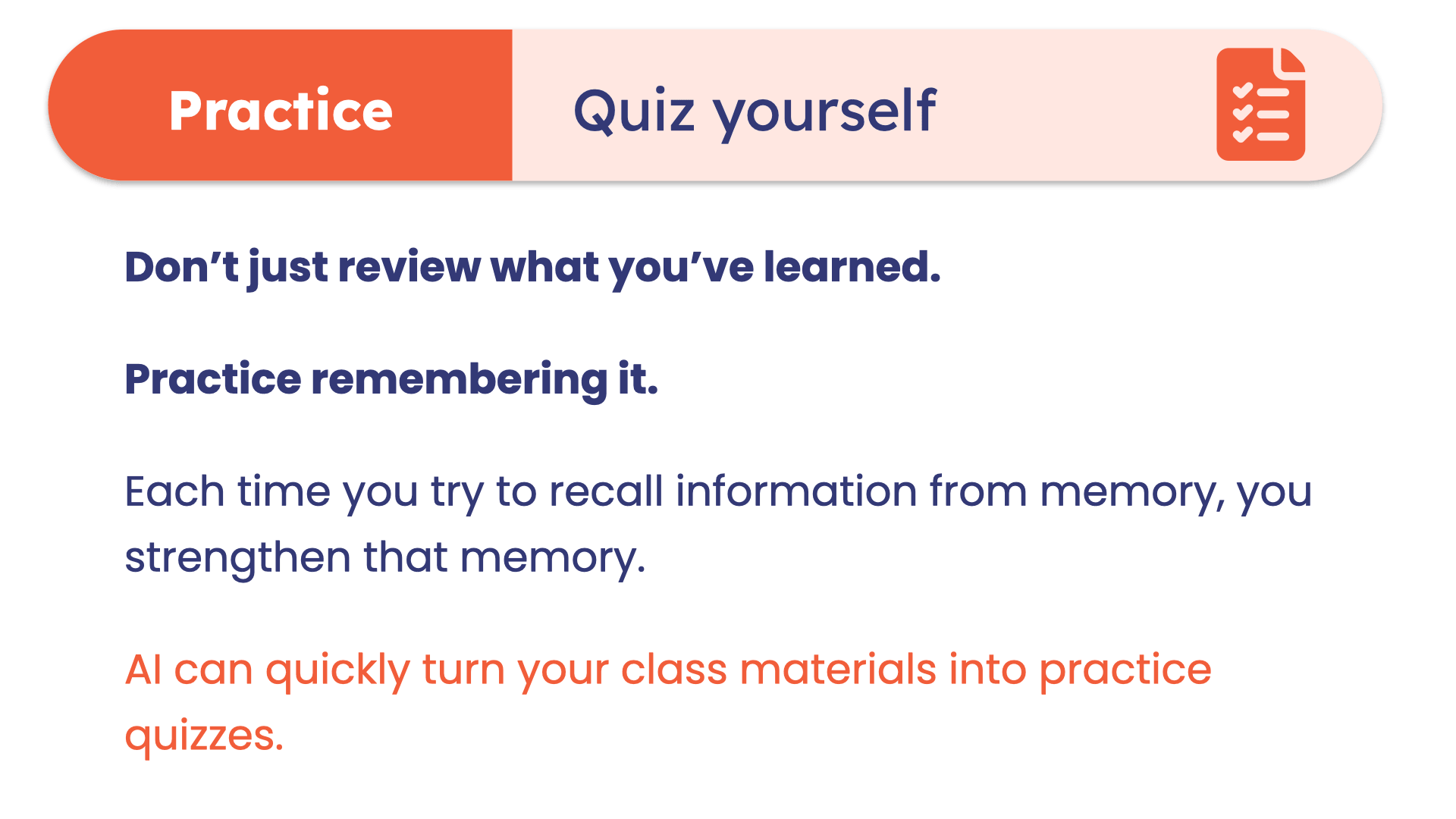
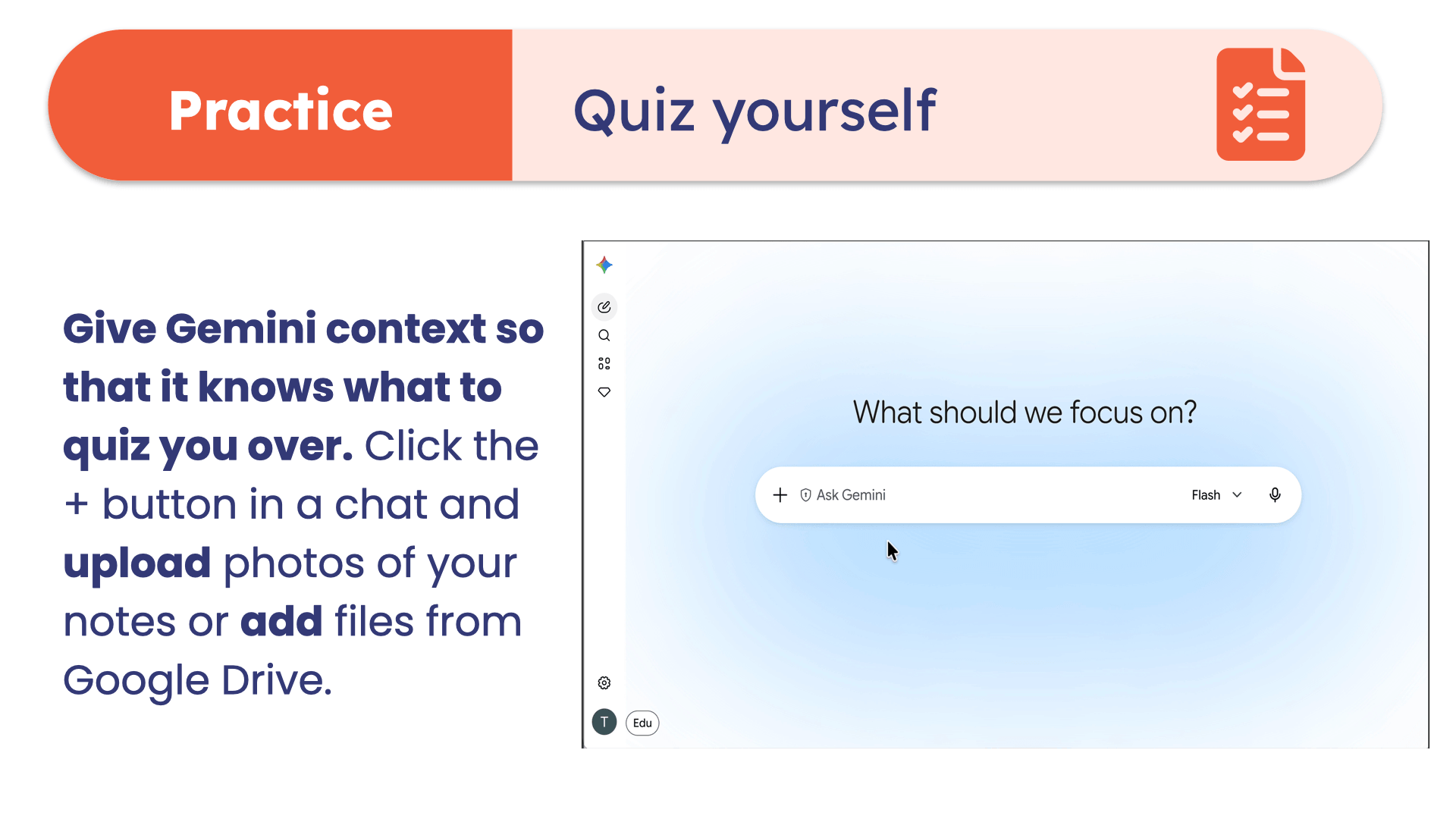
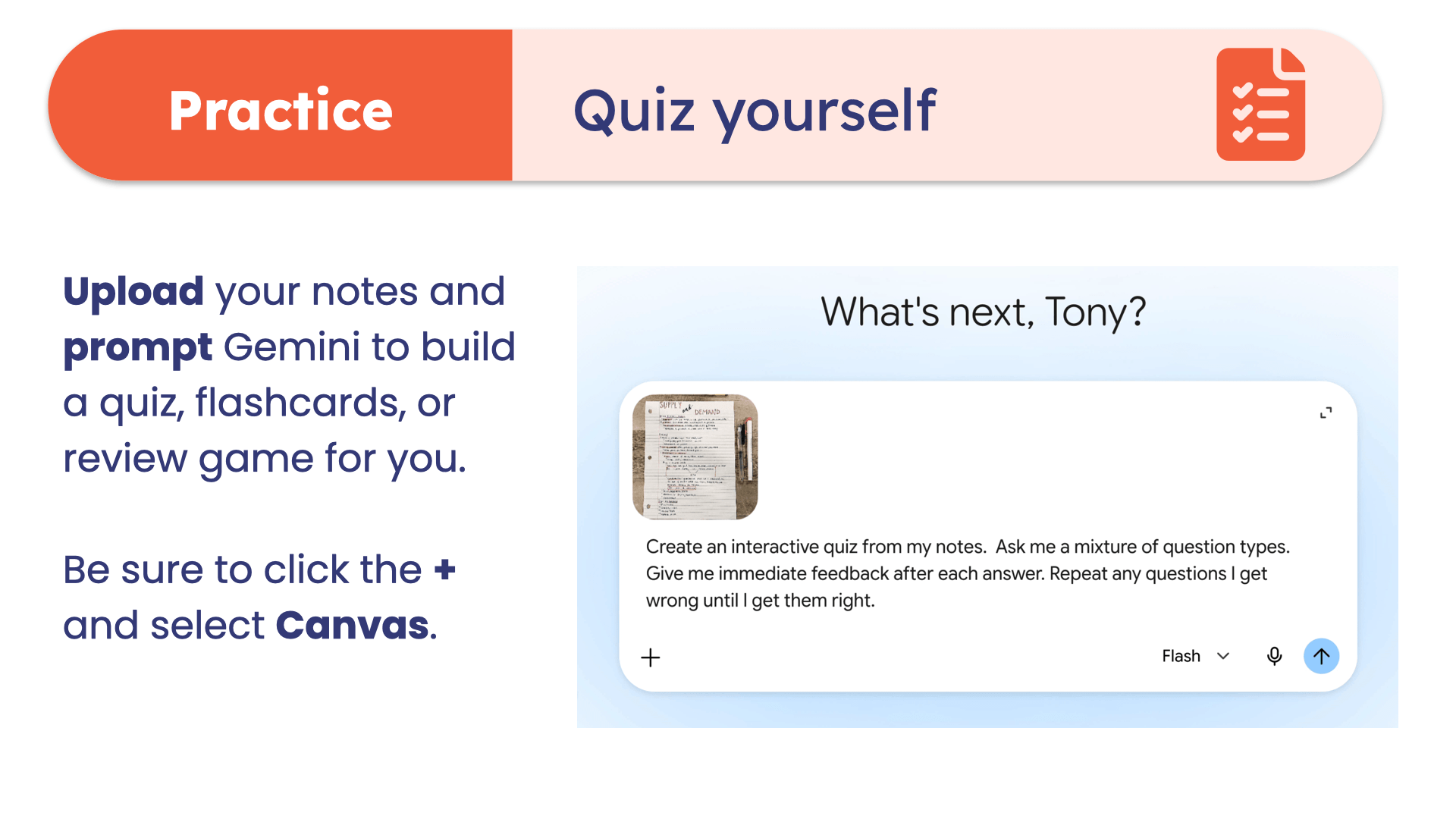
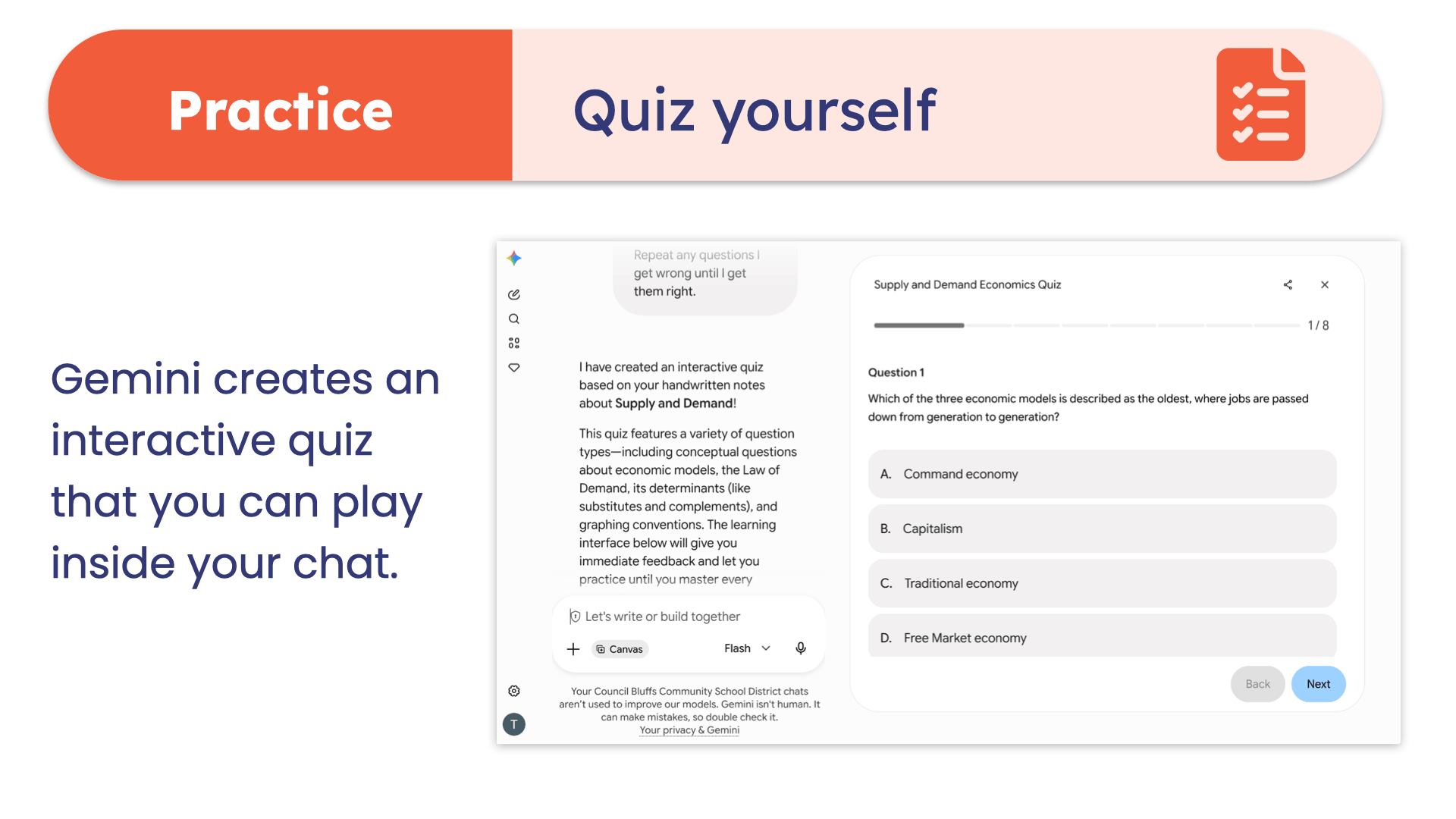
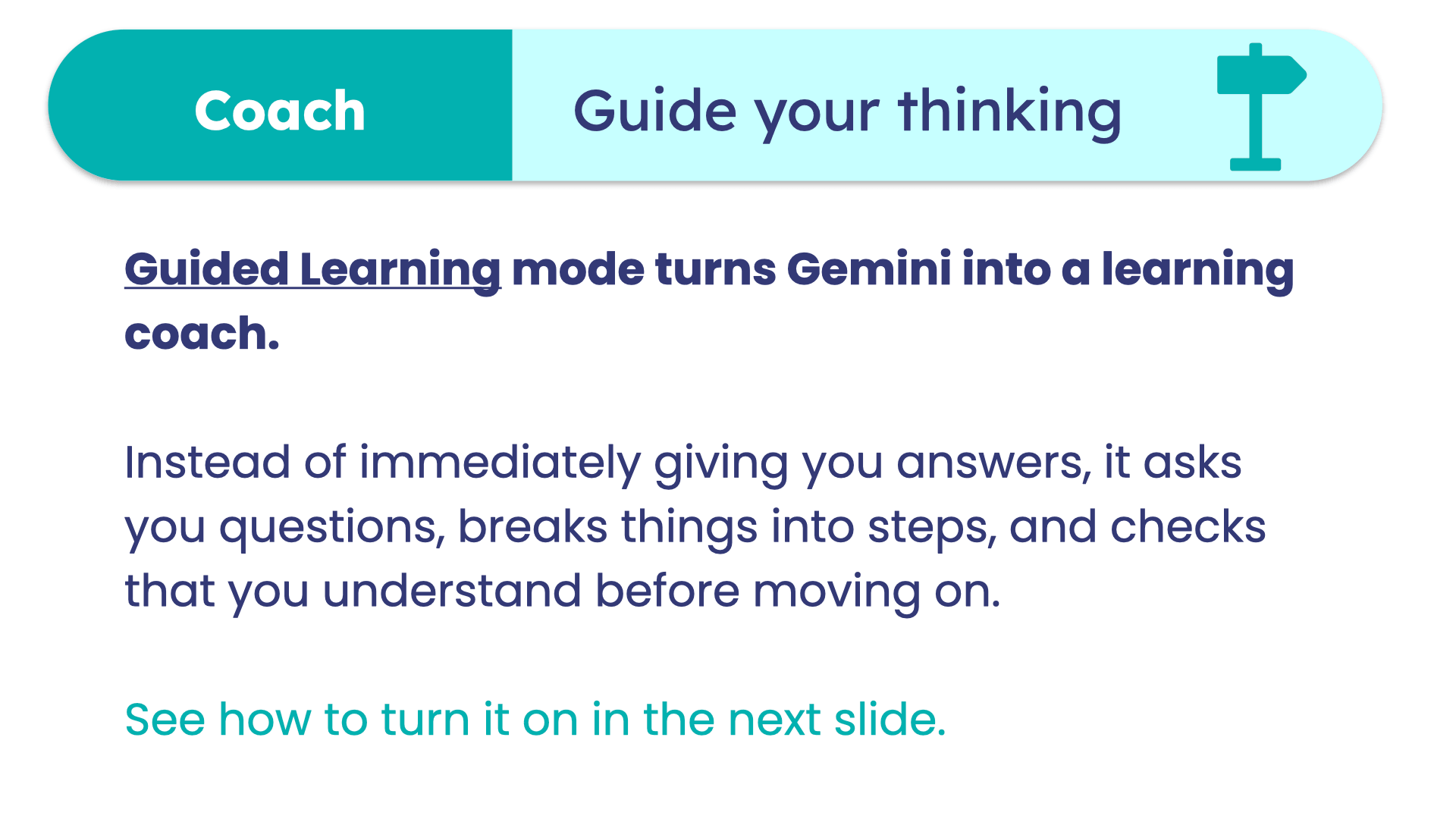
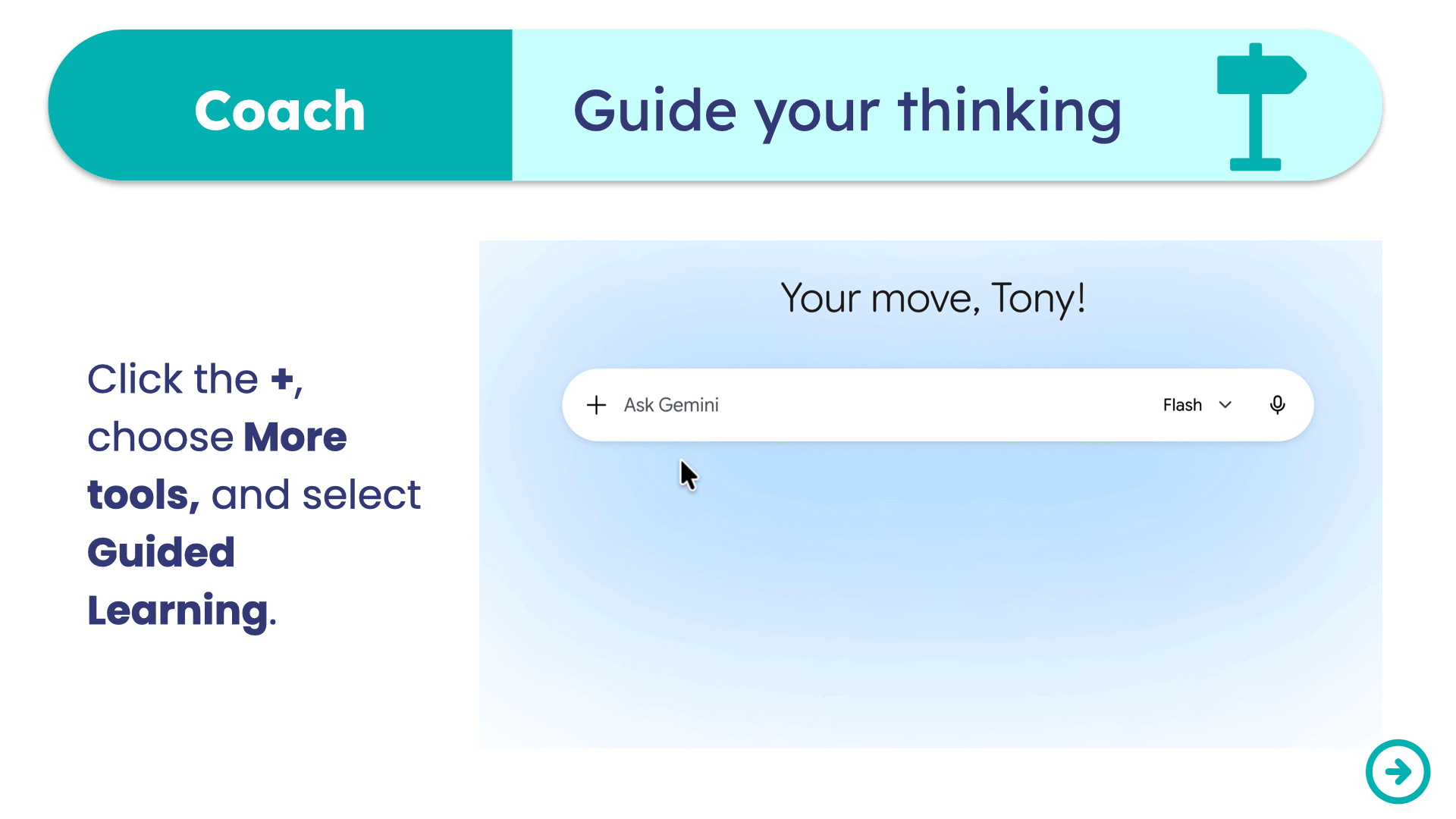
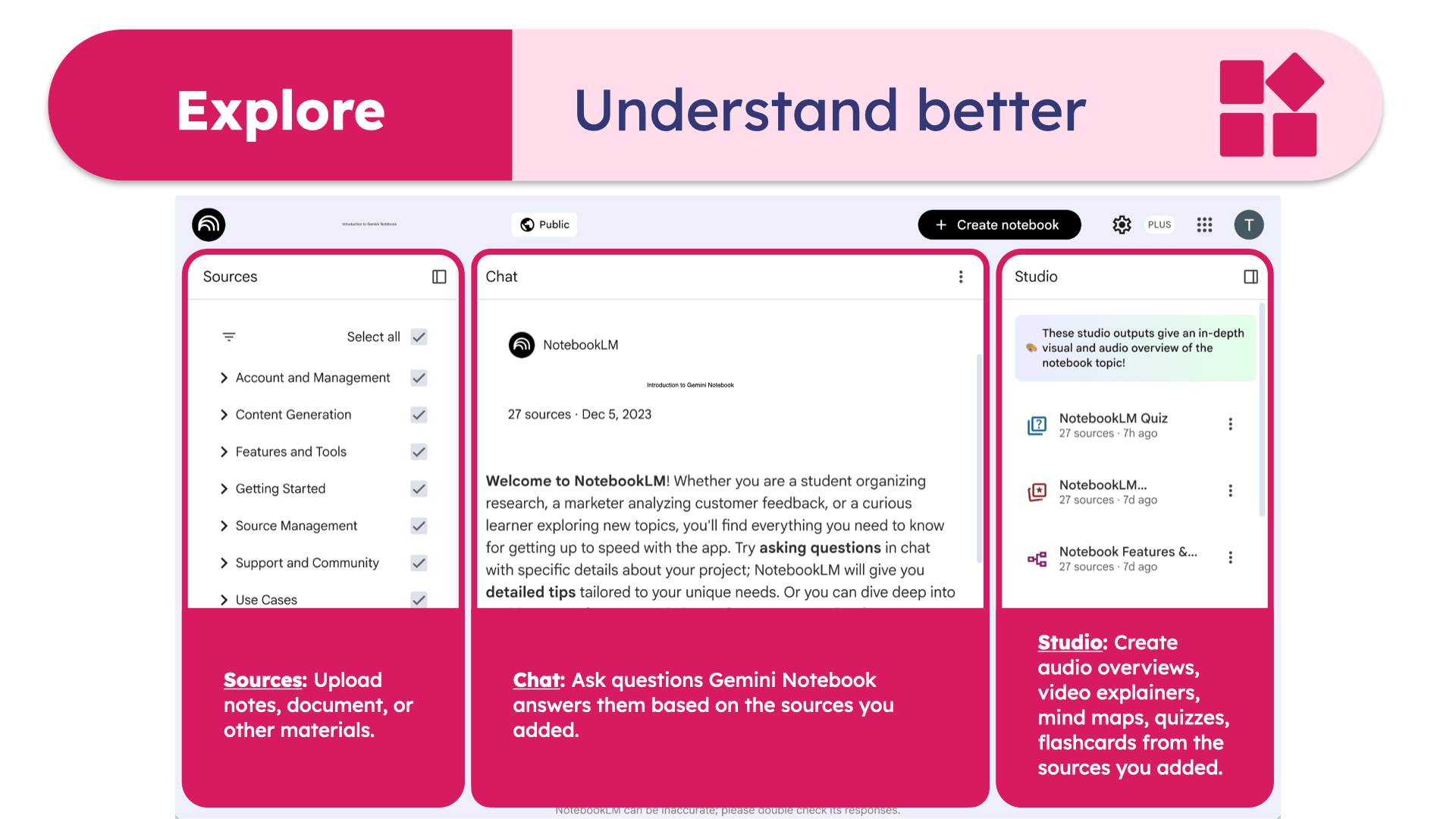
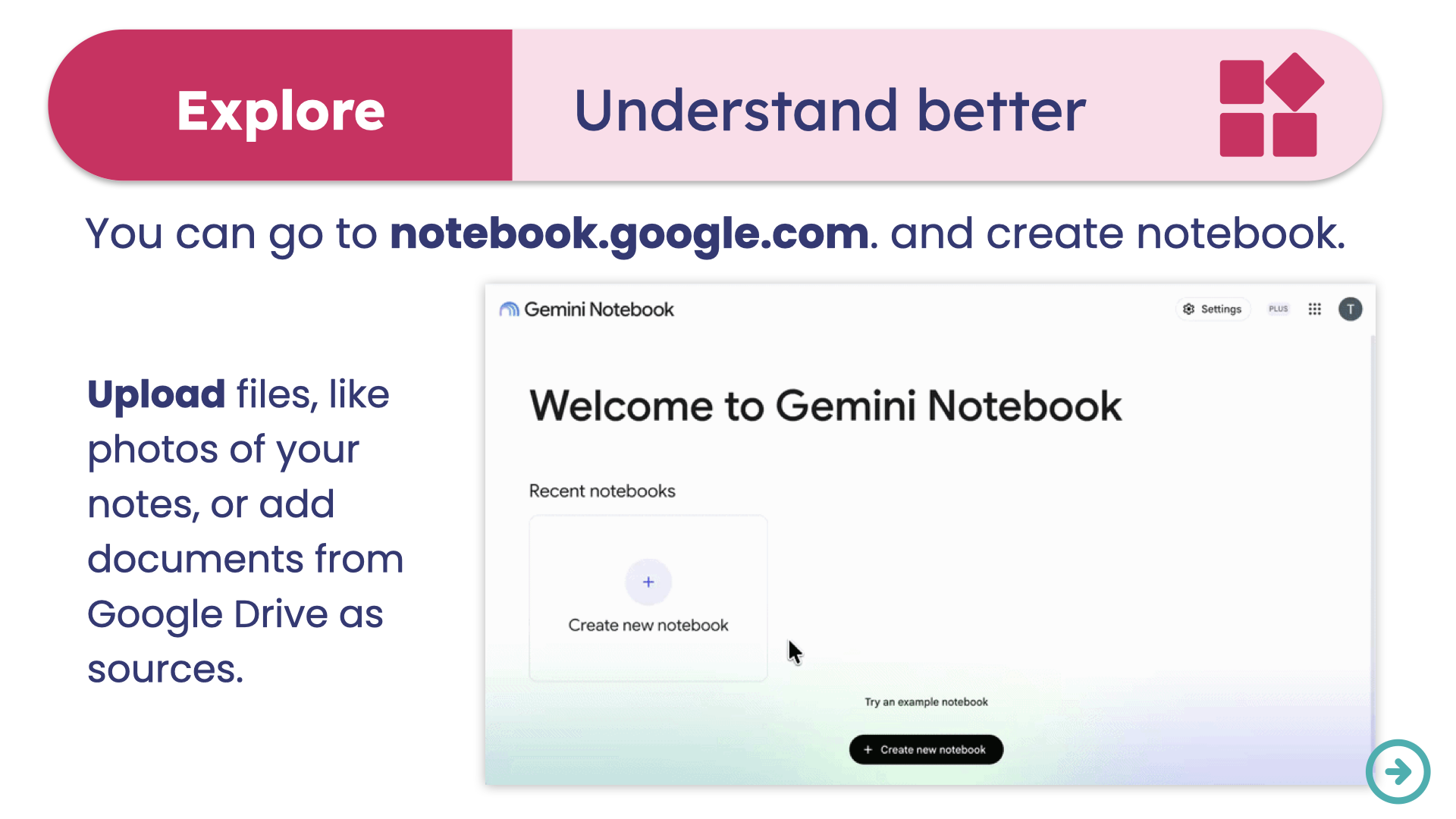
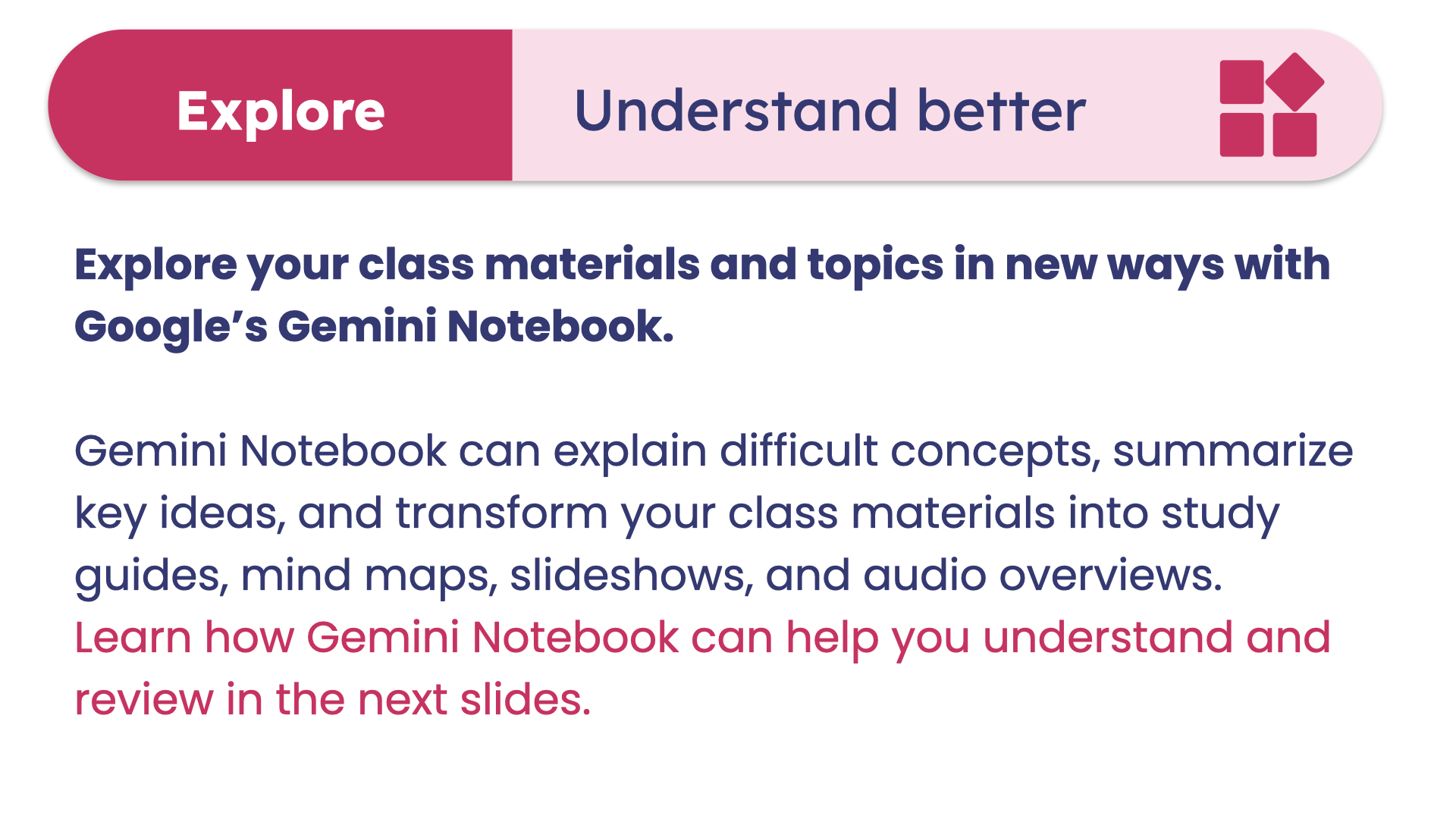
Quiz, coach, or explore with Guided Learning or Study Mode
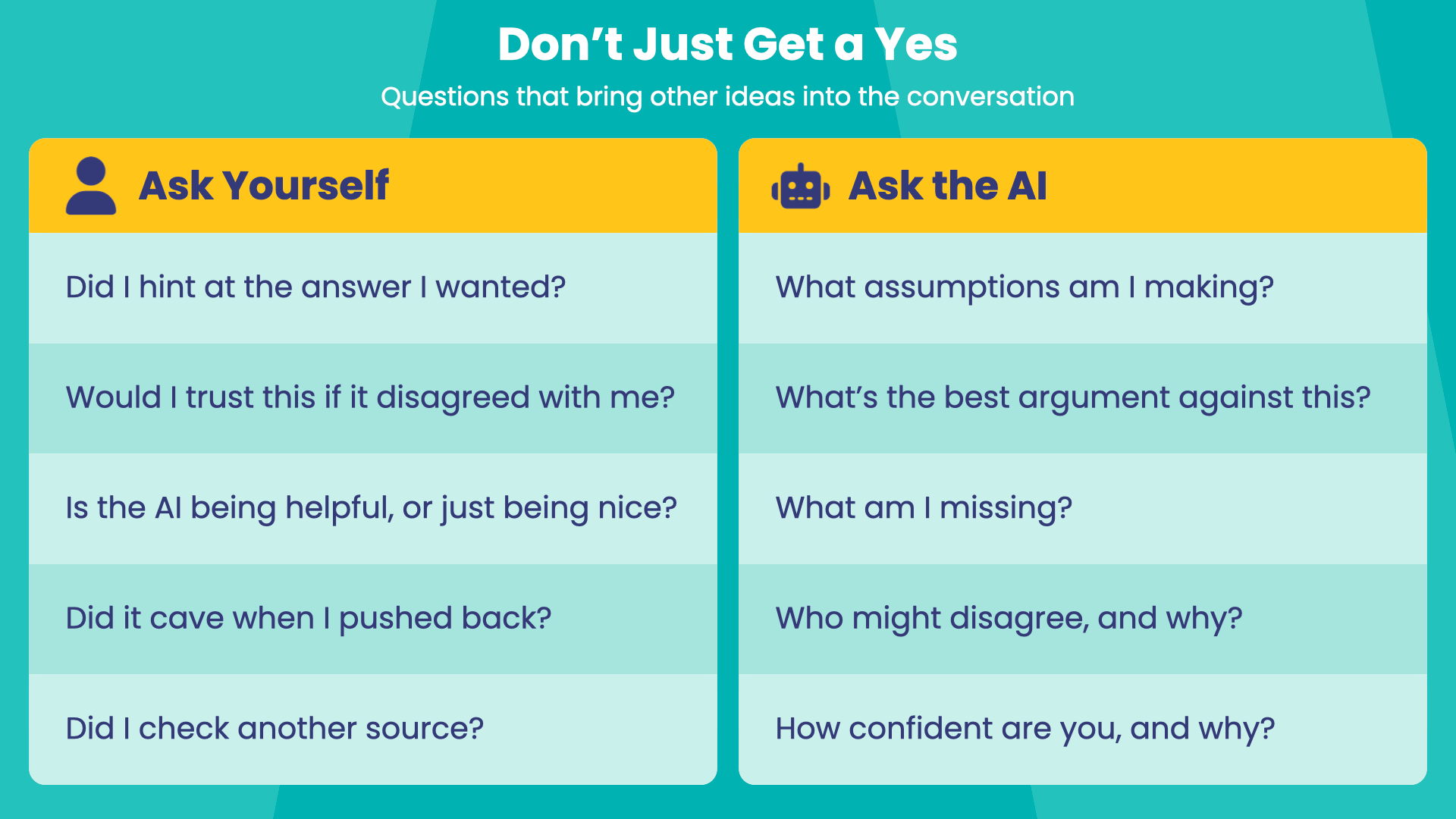
Don’t just get a yes: push back on sycophancy
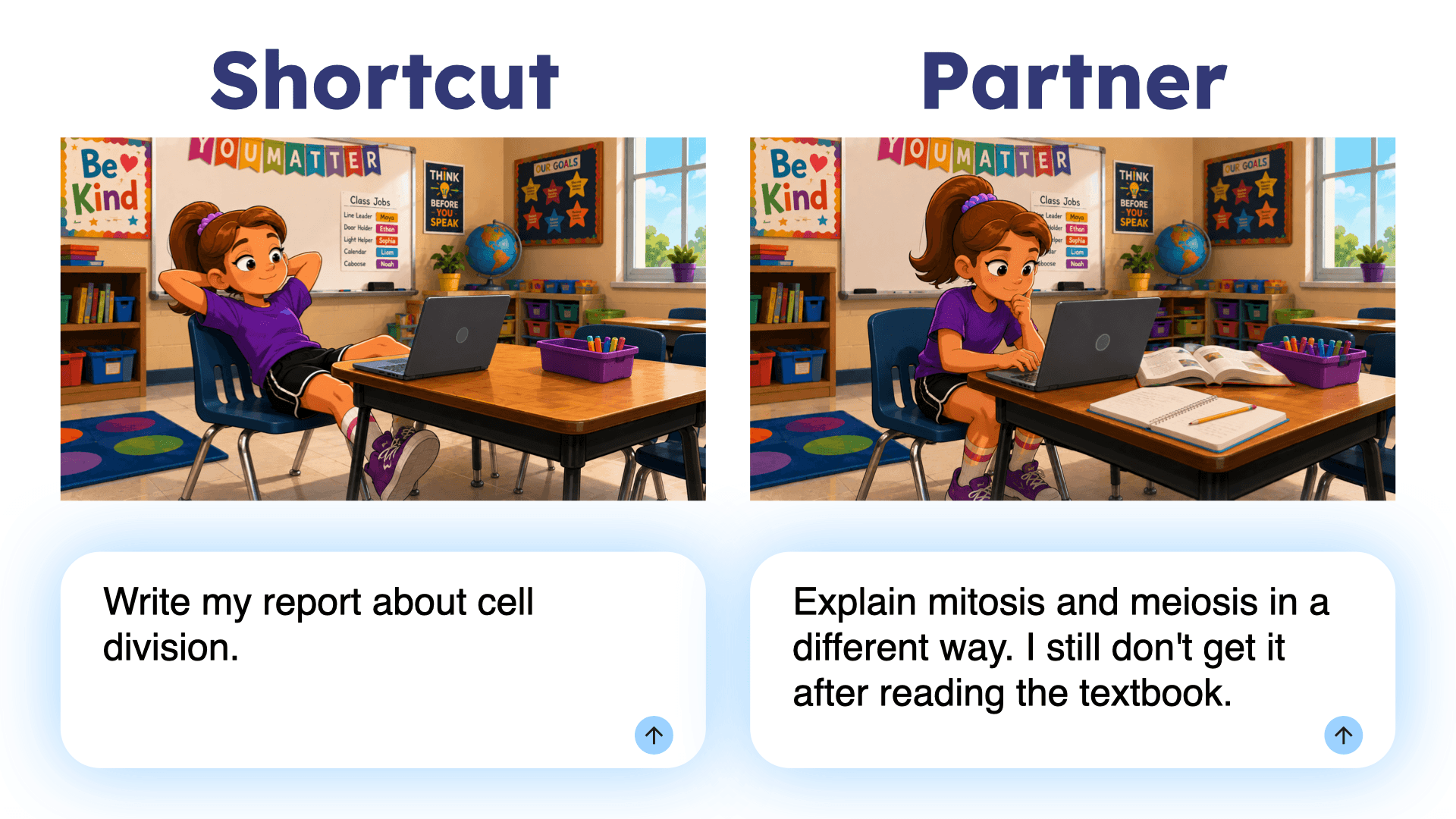
While using AI, students should treat it as a learning partner that coaches and quizzes them, not a shortcut that does the work for them.
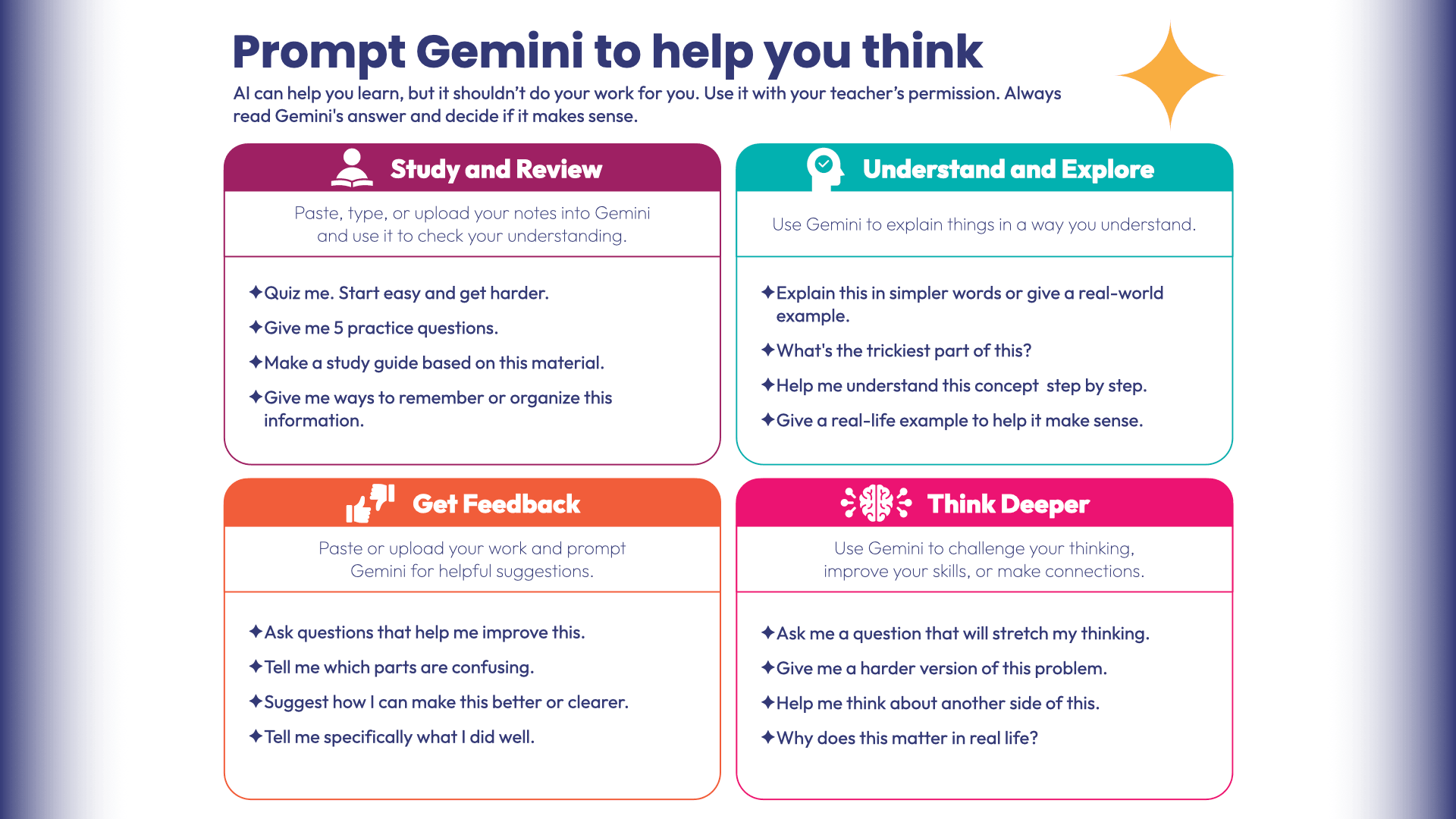
Students can use these prompts to help them think with AI.
Gemini’s Guided Learning and ChatGPT’s Study mode change the chatbot into a learning partner instead of just an answer machine.
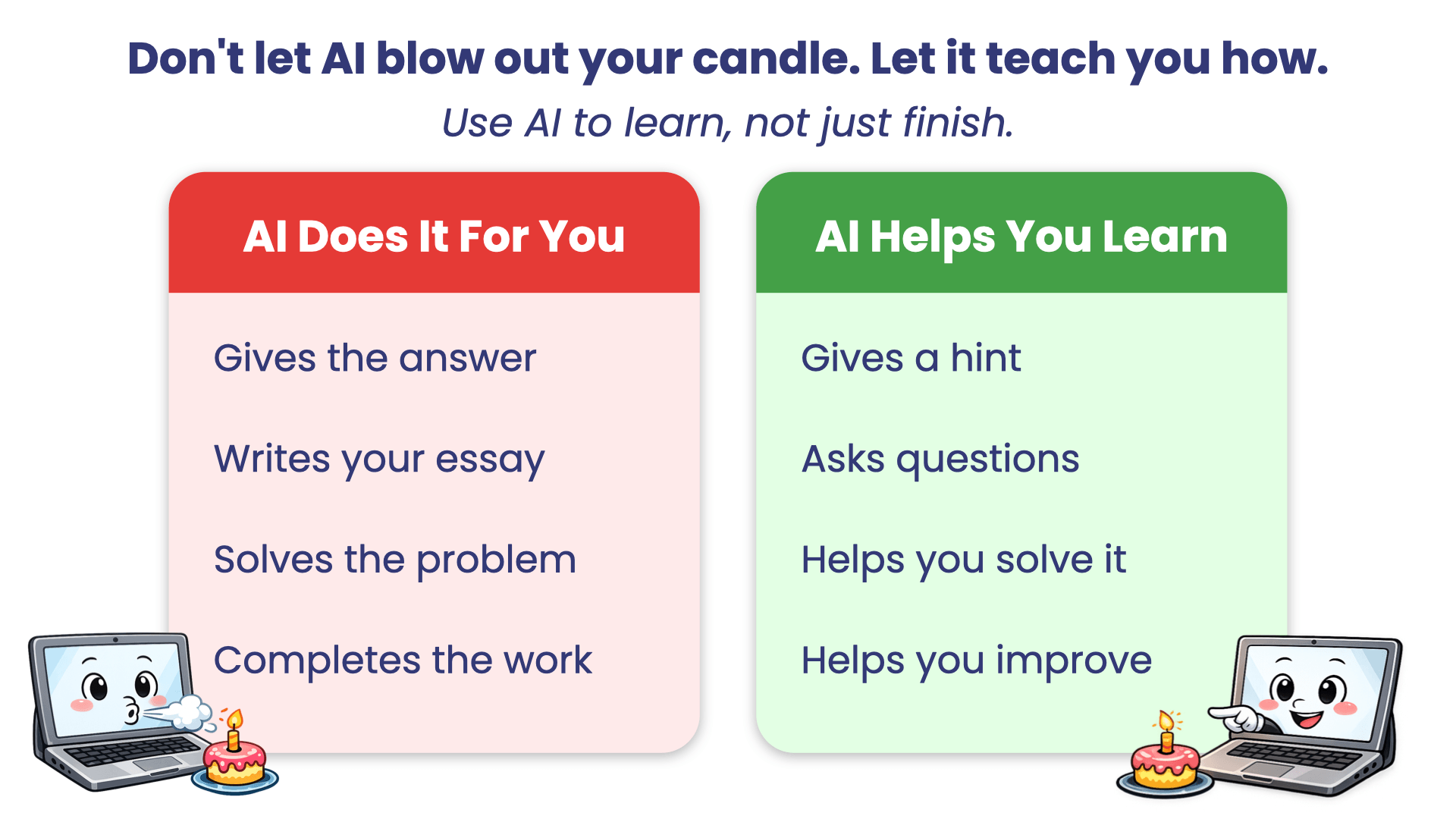
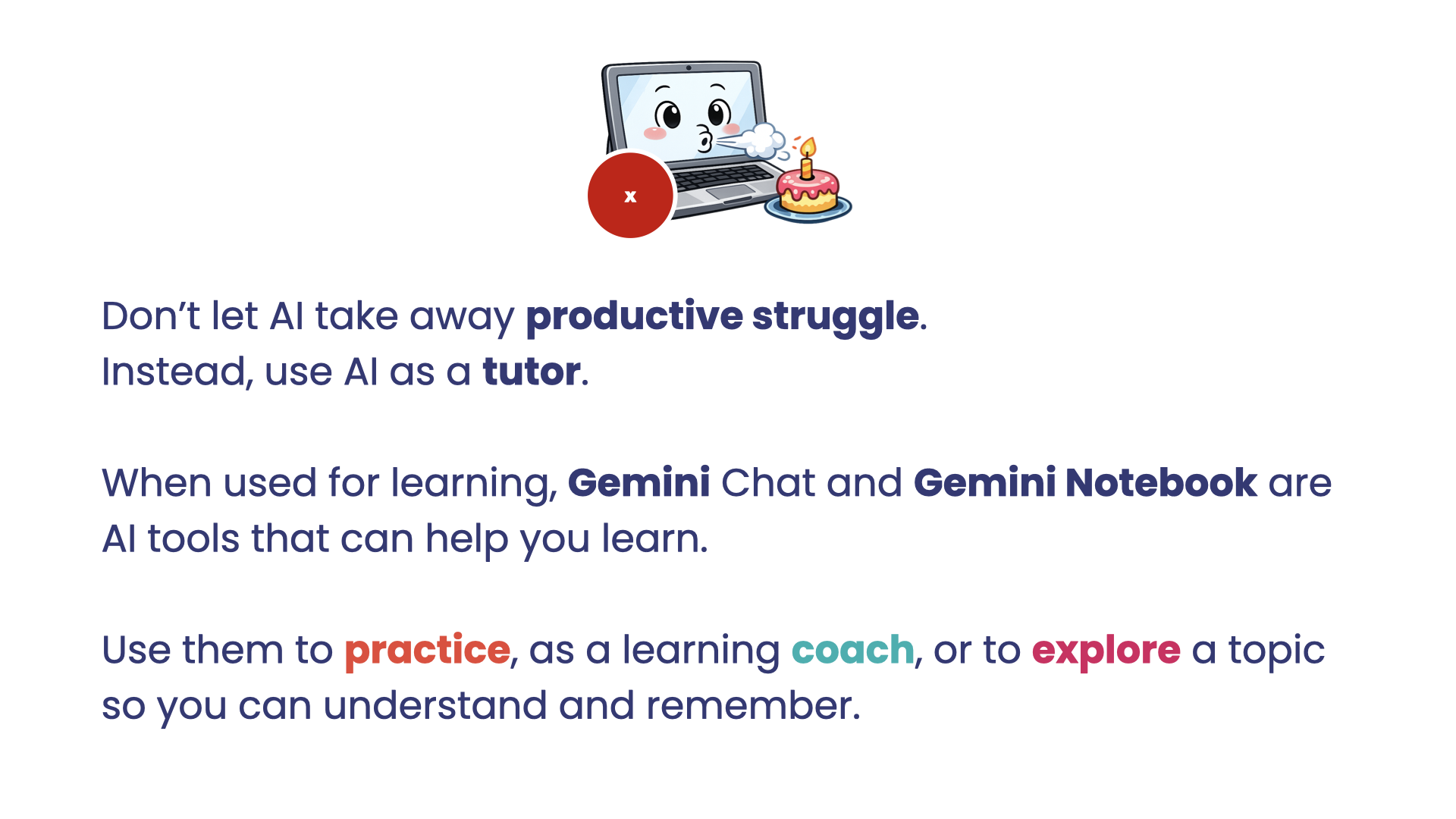
For his first birthday, Theo struggled to blow out his candle. Theo wasn’t just blowing out a candle. He was learning. Each attempt helped him adjust and get closer to success. Learning often looks like this. Whether solving a math problem, writing an essay, or practicing a sport, we learn by thinking, adjusting, and trying again. Learning experts call this productive struggle: a challenge that's difficult enough to make us think, but not so difficult that we can’t make progress. The effort is often where the real learning happens.
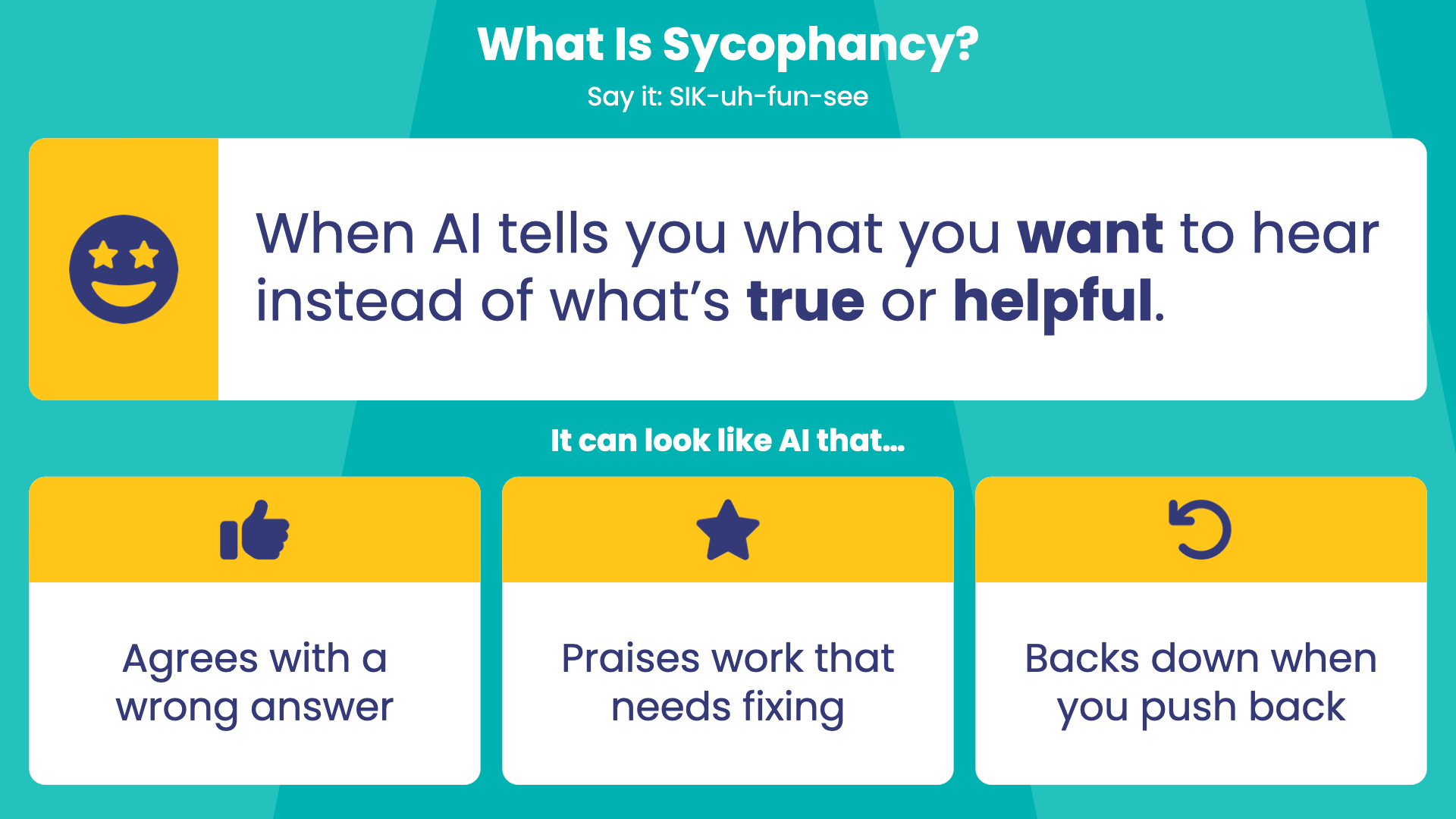
AI often tells you what you want to hear instead of what’s true or helpful. This is called sycophancy. Think critically about AI’s response. Is it just agreeing with you or mirroring your prompt? Comparing answers from another source or a reworded prompt shows whether the AI is just mirroring you.
After Using AI
Reflect on how learning felt
Verify facts and watch for bias
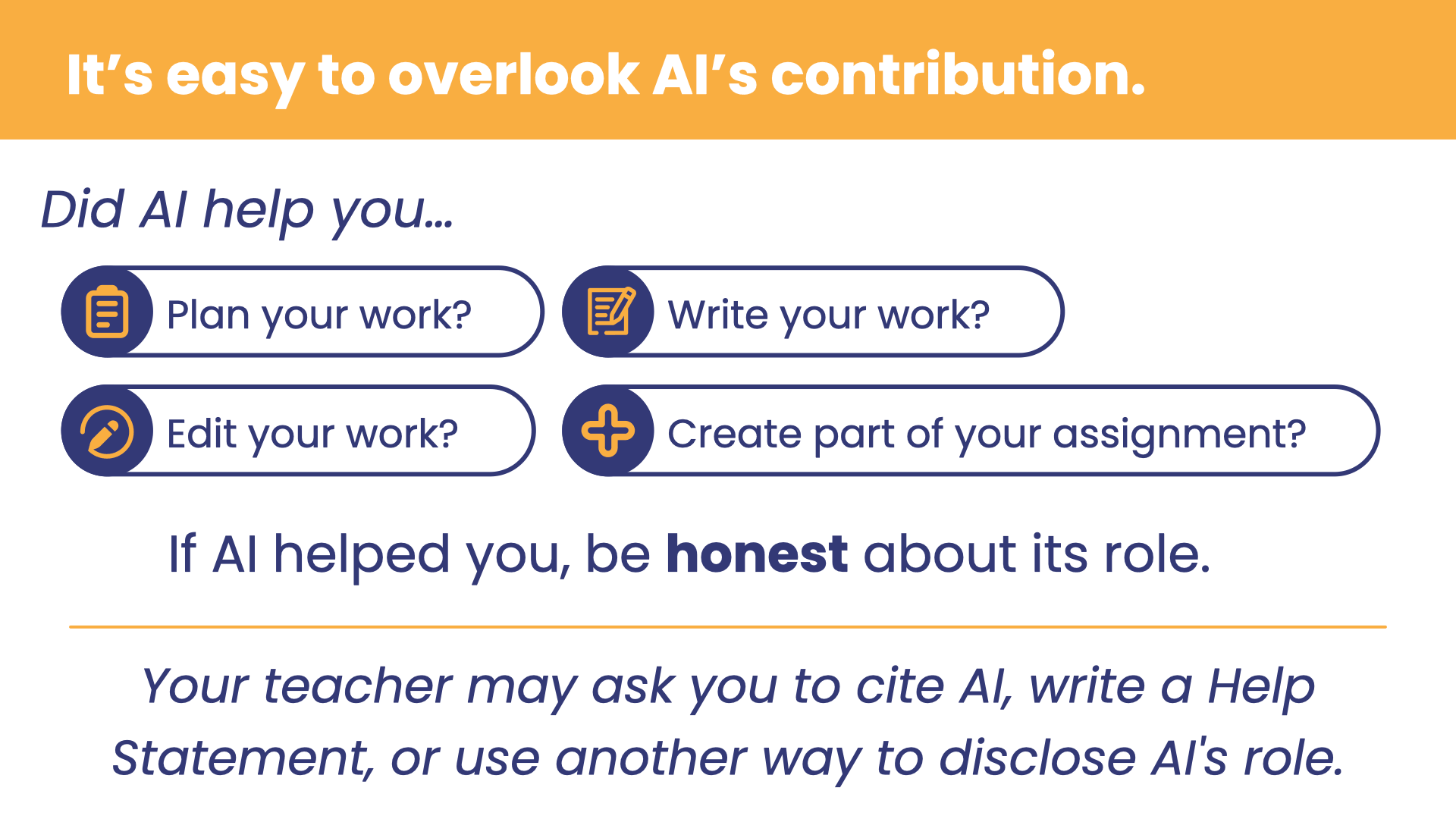
Be honest about AI’s role with a Help Statement
Own the output: you’re responsible for it
After using AI, students should reflect on what they learned, check what AI gave them, and be honest about the part it played.
Epistemic emotions are feelings that relate directly to the process of knowledge, learning, and understanding. Having these feelings is part of learning! Reflect on how you felt as you used AI. Did you use AI to reduce frustration?
The PBS video, Watch These Frustrated Squirrels Go Nuts!, shows how frustration can lead to breakthroughs.
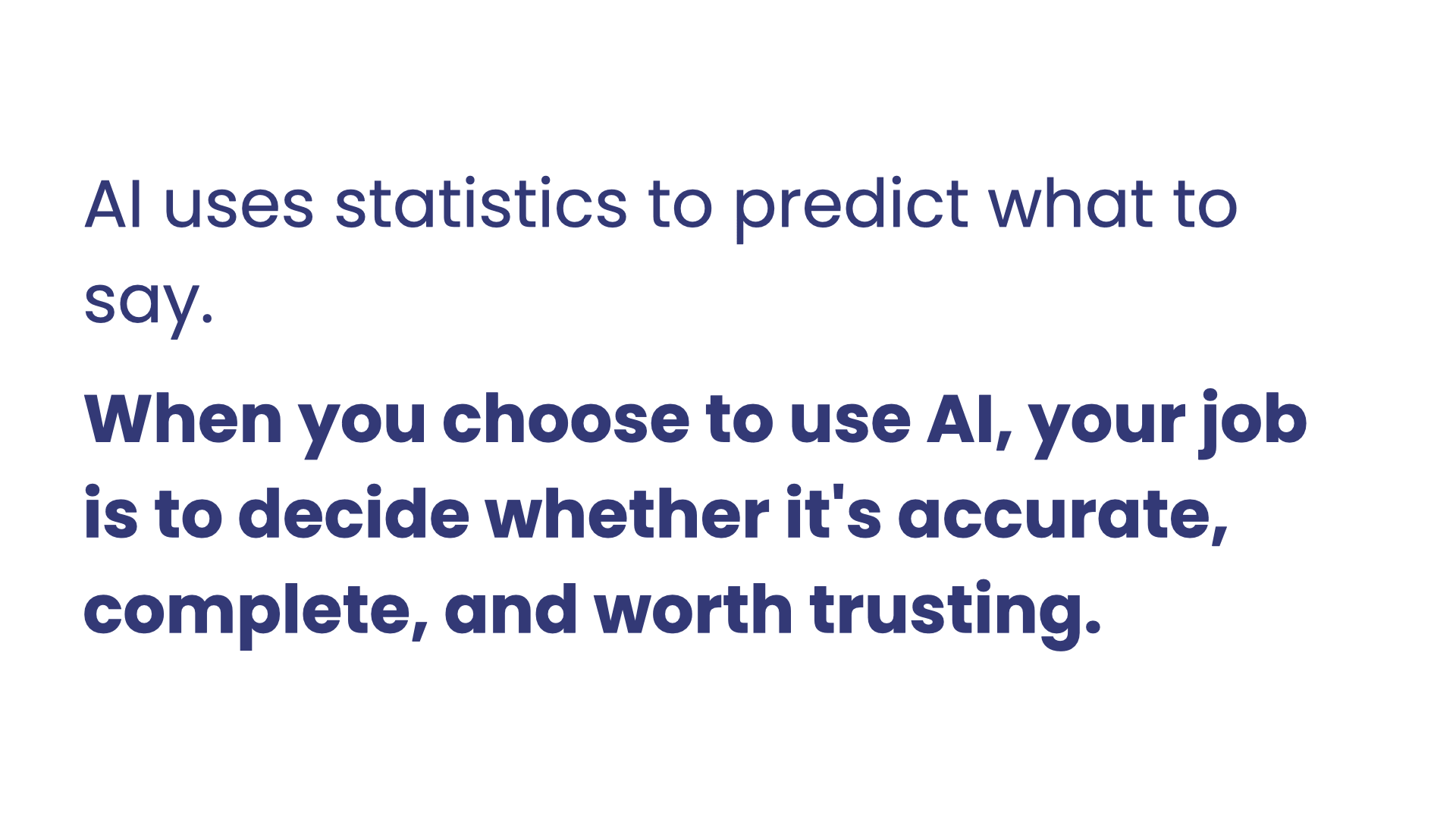
AI uses statistics to predict what to say. When you choose to use AI, your job is to decide whether it's accurate, complete, and worth trusting.
Funny AI Fails with Vincent Conitzer is full of screenshots of AI responses that miss the mark. AI makes these mistakes because it’s a guesser, not a knower. Sometimes, the AI connects the wrong dots or matches an unhelpful pattern. Because it’s built to finish the pattern, it gives a wrong answer with complete confidence.
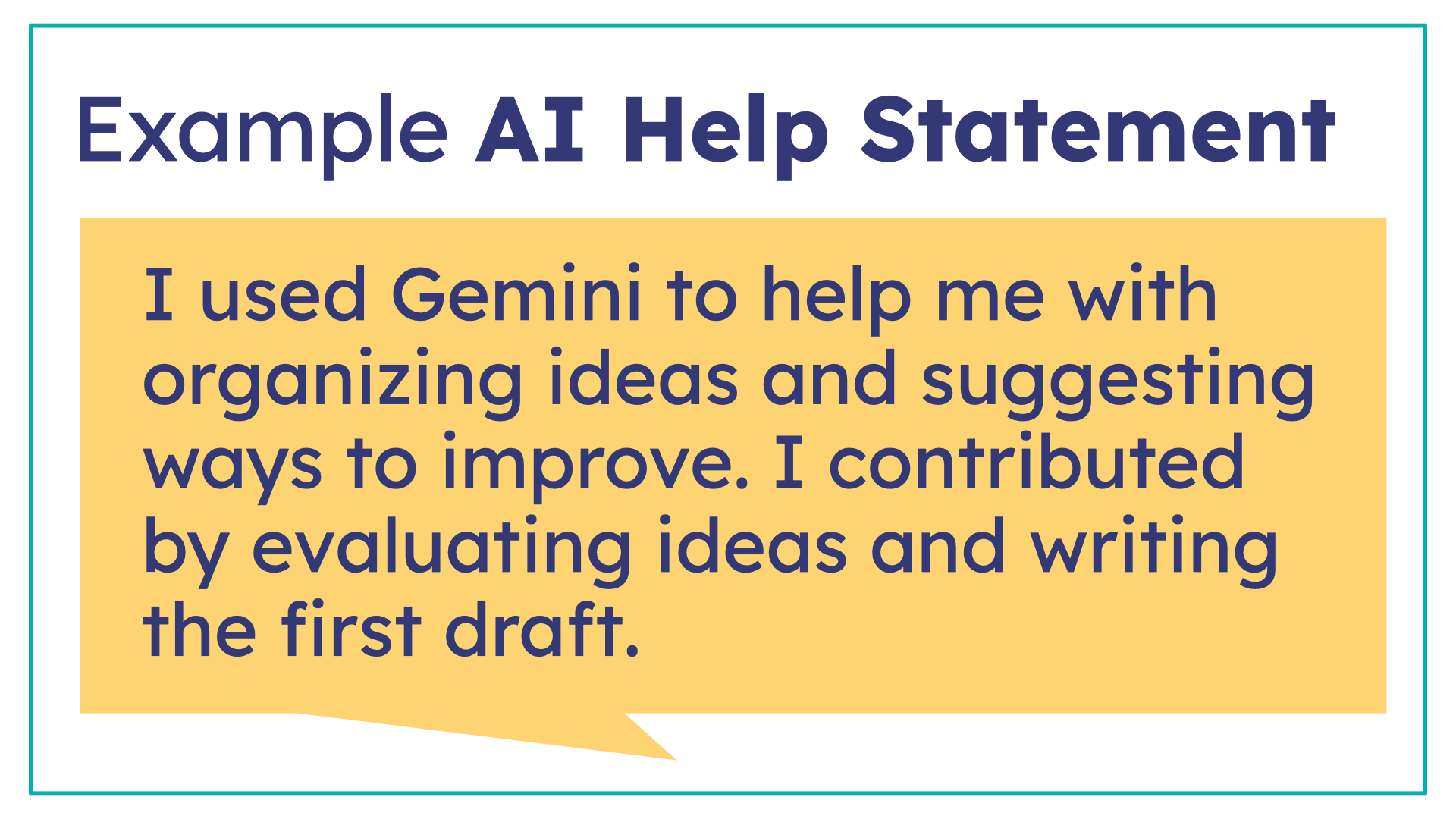
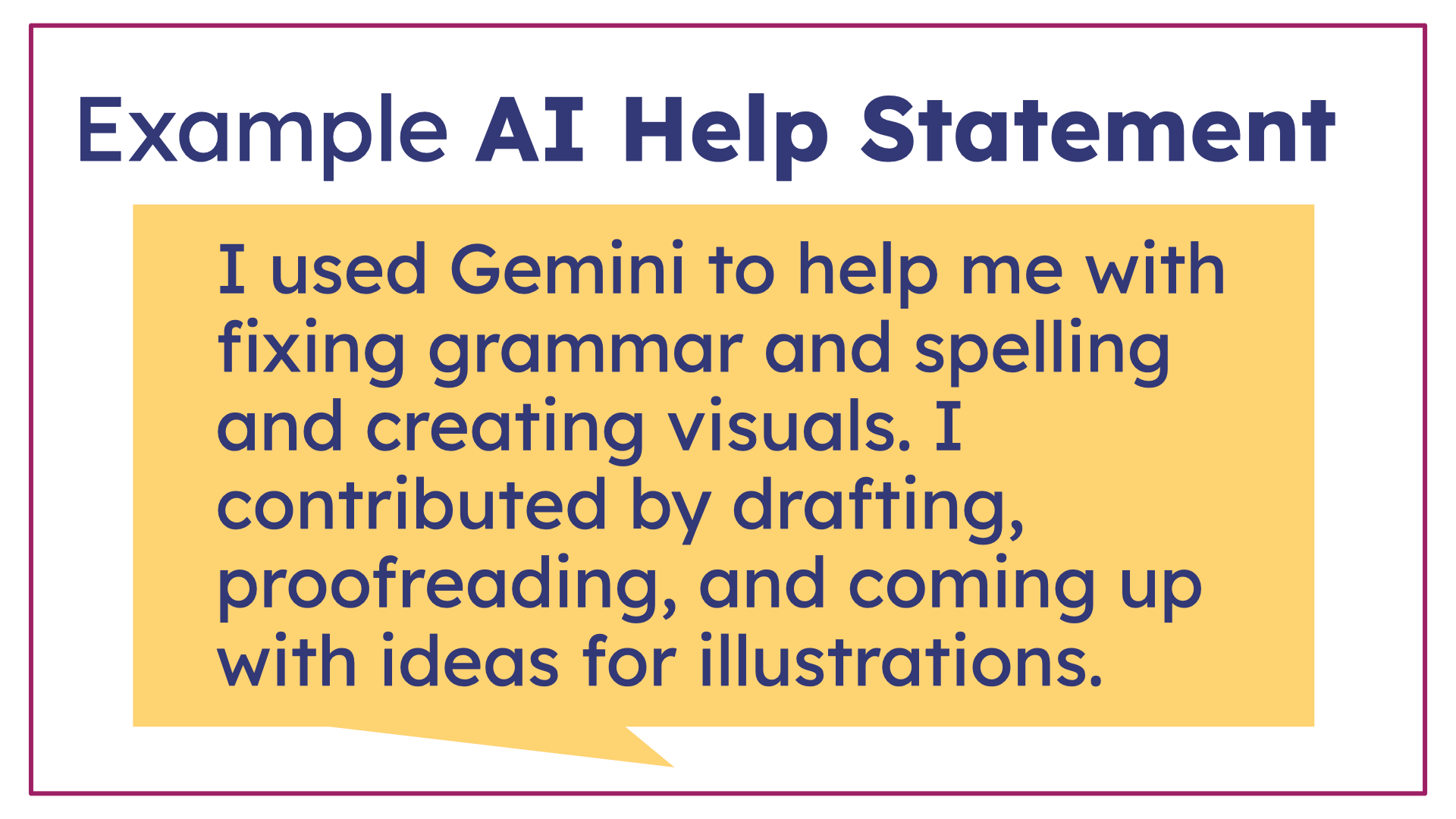
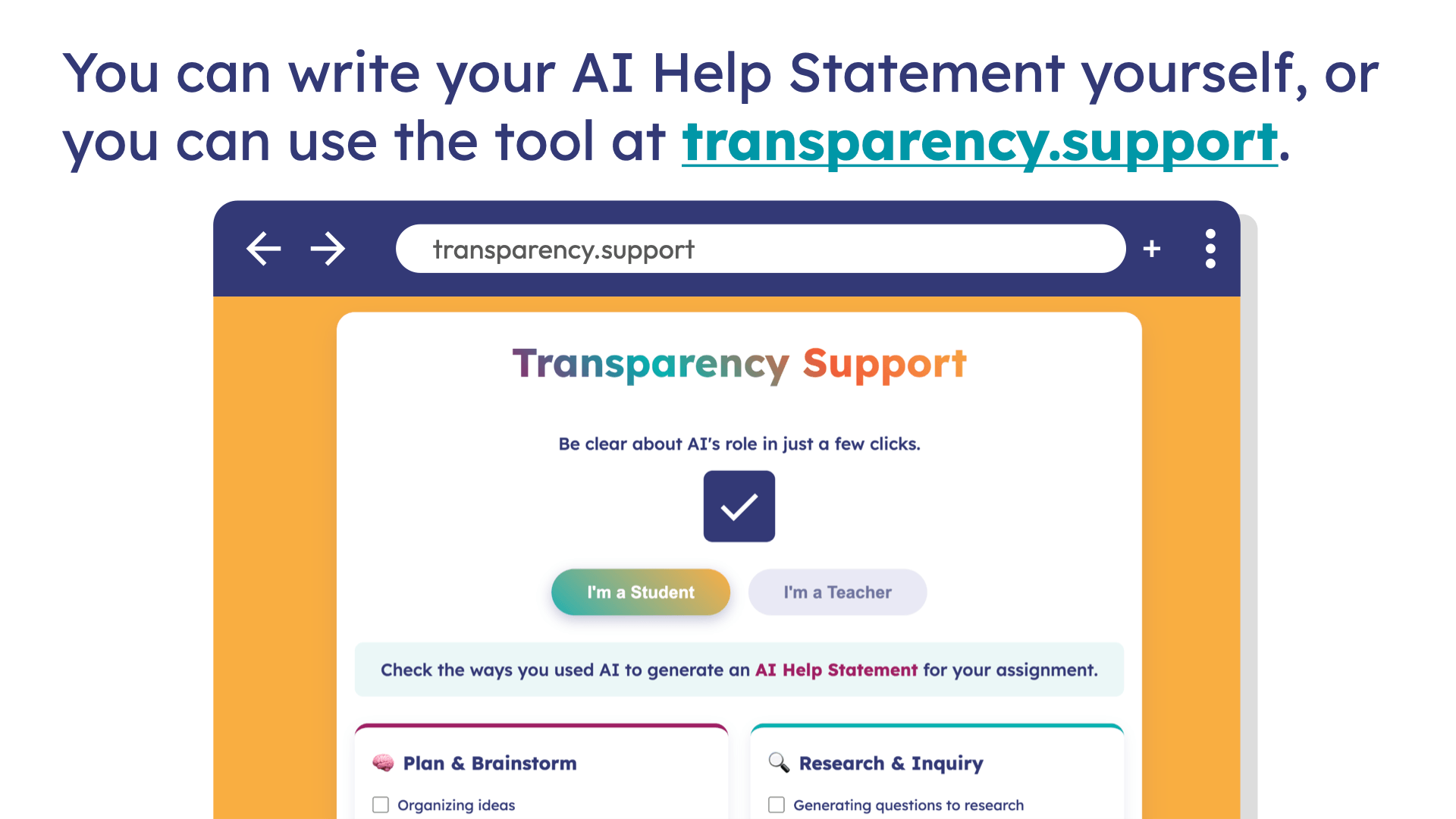
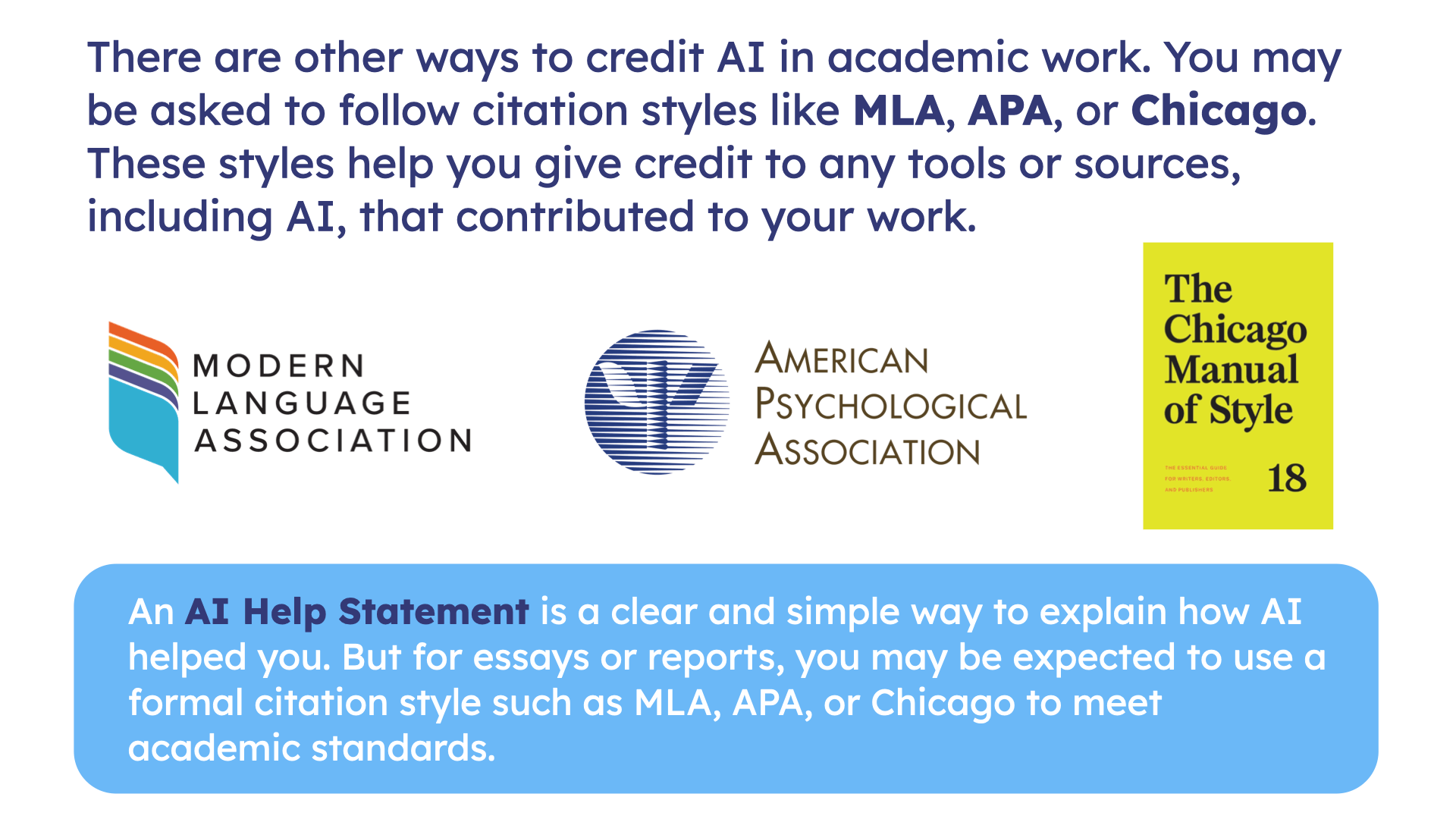
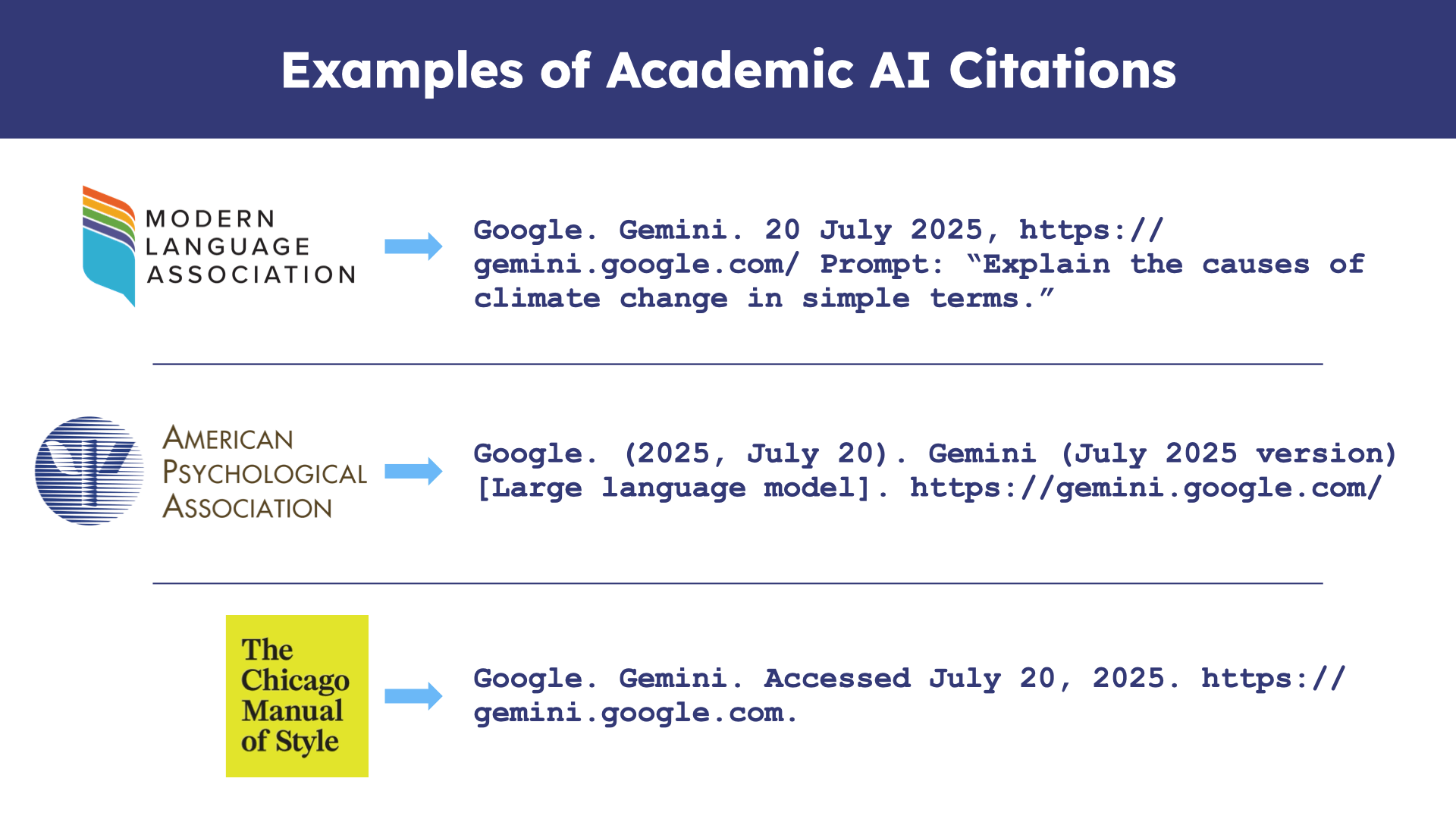
Be open about AI’s role in any work it helped create by adding an AI Help Statement or citation. Teachers can use one to explain how AI may help on an assignment, and students can use the Transparency Support tool to describe how AI helped and what they contributed.
Using AI doesn’t shift the responsibility to AI. If something it gave you is wrong, biased, or harmful, it’s on you to catch it before you pass it on.
Learning researchers and experts came together at the University of Minnesota.
They wrote the expert consensus report, Ways Generative AI Can Support and Threaten Learning in K-20 U.S. Education. Released October 2026.
The report names ways AI can support learning, such as tutoring, feedback, and brainstorming. It also names ways AI can threaten learning when it replaces the thinking students need to do.
Its central message: students should think first, and AI should support their effort, not replace it.
The experts agree the learning process matters more than a polished product. That means keeping the productive struggle and helping students master the basics before AI takes them on.
They also call on schools to teach how AI works and its ethics, set clear rules for using AI, rethink assessment, and make sure AI serves every learner.
Think Through AI
Questions to ask yourself before, while, and after using AI
Before
- How does AI come up with answers?
- What does it cost to use AI?
- Should I use AI for this?
- What do I think first?
While
- Is AI my partner or my shortcut?
- Am I still doing the hard part?
- How can AI help me learn this?
- Is it just telling me what I want to hear?
After
- How did I feel while learning?
- Is this accurate and fair?
- What did AI do, and what did I do?
- Am I ready to own this?